You’ve just bought a turntable — maybe a shiny new Audio-Technica AT-LP120X or a second-hand Rega Planar 1 from eBay — and you’ve plugged it into your amplifier. Nothing. Or worse, a thin, tinny whisper of music that sounds like it’s coming through a wet sock. Before you start questioning your life choices, there’s a missing piece in the chain: the phono preamp.
I’ve spent the better part of three years swapping phono stages in and out of my setup, from a £25 budget box to a £500 valve unit, and the difference it makes is not subtle. A phono preamp is one of those bits of kit that’s easy to overlook — it sits quietly between your turntable and amplifier doing critical work that most people never think about. But get it right, and your records will sound the way they’re supposed to. Get it wrong, and you’ll wonder why vinyl sounds worse than Spotify.
This guide breaks down exactly what a phono preamp does, why turntables need one, and how to work out whether you already have one hiding in your setup. I’ll also recommend some specific models at different price points, because knowing the theory is only useful if you know what to actually buy.
What Is a Phono Preamp and Why Does It Exist?
A phono preamp — also called a phono stage or phono preamplifier — does two essential jobs. First, it amplifies the very weak signal that comes out of your turntable’s cartridge. The electrical output from a moving magnet cartridge is roughly 3-6 millivolts. For comparison, a CD player or streaming device outputs around 2 volts. That’s a massive gap, and without amplification, you’ll barely hear anything.
Second, it applies something called RIAA equalisation. When vinyl records are cut at the pressing plant, the audio signal is deliberately altered: bass frequencies are reduced and treble frequencies are boosted. This is done because deep bass would cause the cutting stylus to make grooves so wide they’d eat into neighbouring tracks, and quieter high frequencies would be lost in surface noise. The RIAA curve (standardised in 1954 by the Recording Industry Association of America) defines exactly how this alteration works.
Your phono preamp reverses the process — boosting the bass back up and rolling off the treble — so you hear the music as the recording engineer intended. Without RIAA equalisation, vinyl sounds shrill, thin, and bass-light. It’s not broken; it just hasn’t been corrected yet.
Think of it this way: the record stores a compressed, altered version of the sound. The phono preamp is the decoder.
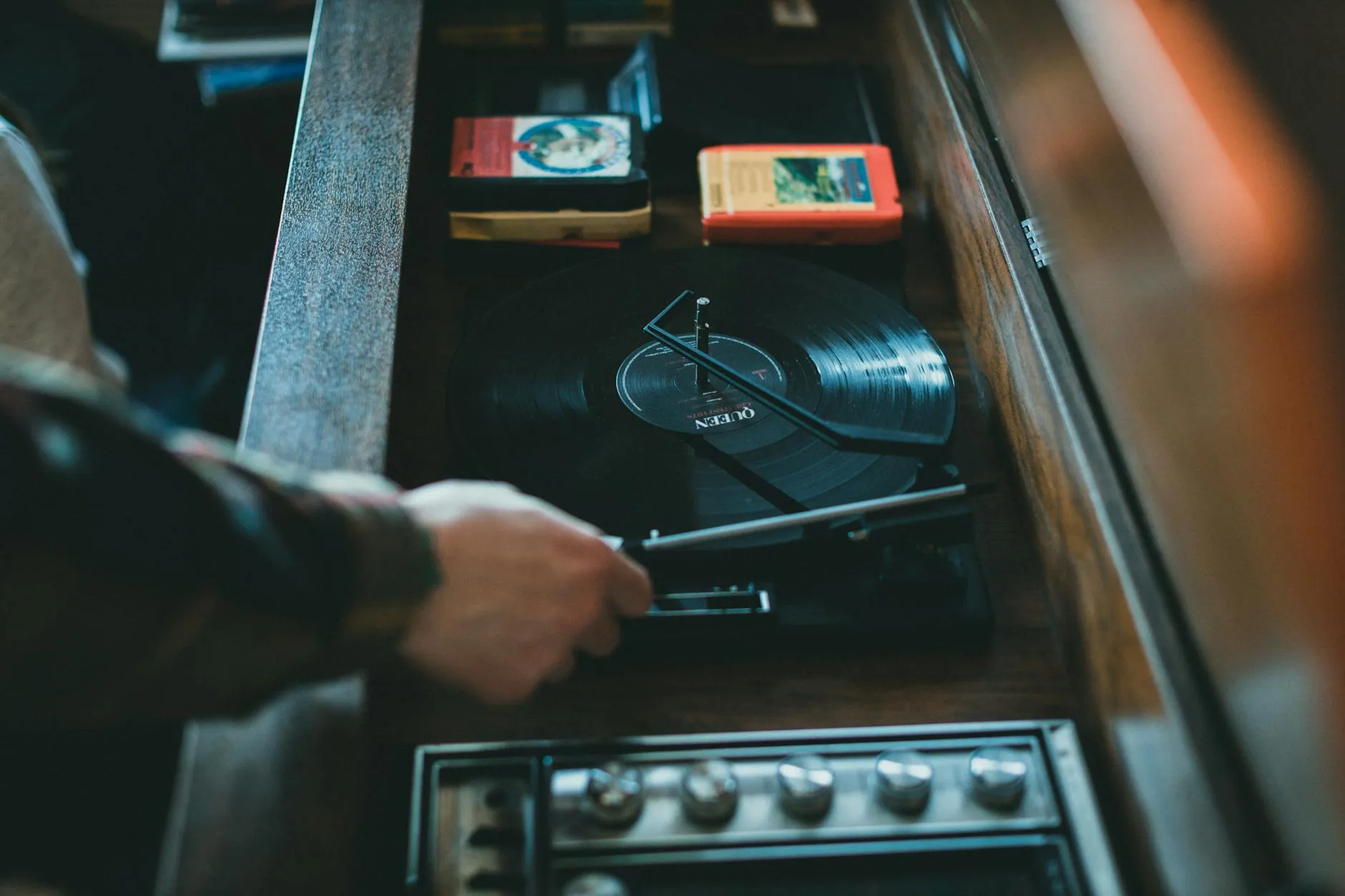
Do You Already Have One?
This is the first question to answer before spending any money. There are three places a phono preamp might already live in your system:
- Built into your turntable. Many modern turntables aimed at beginners include an internal phono stage. The Audio-Technica AT-LP60X (about £130), AT-LP120X (about £250), and Sony PS-LX310BT (about £200) all have built-in preamps, usually with a switch on the back to toggle between “phono” and “line” output. If your turntable has a “line out” or a phono/line switch, you’ve got one built in.
- Built into your amplifier or receiver. Older hi-fi amplifiers (anything from the ’70s through ’90s, and plenty of modern ones) often include a dedicated phono input. Look at the back panel — if there’s an input labelled “phono” with a separate ground terminal, your amp has a phono stage. Modern budget amps like the Cambridge Audio AXA25 (about £200) still include phono inputs, though many newer models skip it.
- A standalone external unit. This is a separate box that sits between your turntable and amplifier. If you’ve inherited a turntable setup, check whether there’s a small box in the chain you haven’t identified — it might be your phono preamp.
If your turntable only has standard RCA outputs (no phono/line switch) and your amplifier doesn’t have a phono input, you need an external phono preamp. Plug the turntable directly into a regular “aux” or “CD” input without one, and you’ll get that barely-audible, tinny sound I mentioned earlier.
Moving Magnet vs Moving Coil: Why It Matters
Before choosing a phono preamp, you need to know what type of cartridge your turntable uses. There are two main types, and they have very different output levels:
- Moving Magnet (MM) — the most common type, found on virtually every turntable under £500. Output is typically 3-6mV. Most phono preamps support MM cartridges, and unless you’ve specifically upgraded to something exotic, this is what you have.
- Moving Coil (MC) — found on higher-end turntables and aftermarket cartridges. Output is much lower, typically 0.2-0.5mV for low-output MC designs. These need far more amplification, so you need a phono preamp that explicitly supports MC, or a separate step-up transformer.
If you’re running a Rega Carbon, Audio-Technica AT-VM95E, or Ortofon 2M Red — all popular cartridges in the £30-100 range — you have a moving magnet cartridge. A standard MM phono preamp will work perfectly.
If you’ve splashed out on something like an Ortofon Quintet Black (about £600) or a Denon DL-103 (about £300), that’s a moving coil cartridge and you need an MC-compatible preamp. These cost more, but the cartridge warranted the investment.
Built-In vs External: Which Sounds Better?
The built-in phono stages found in turntables like the AT-LP120X are functional. They’ll get you listening, and for a first turntable setup, they’re perfectly adequate. I used the built-in preamp on my LP120X for about six months before curiosity got the better of me.
But when I switched to a standalone Rega Fono Mini A2 (about £65 from Richer Sounds), the improvement was immediate. The bass tightened up, the midrange gained warmth, and surface noise seemed to drop. It wasn’t a night-and-day transformation at first listen, but once I heard the external preamp, I couldn’t unhear the difference. Going back to the internal one felt flat and congested. For a related angle, see our Best Record Players with Built-In Speakers guide.
The reason is simple: built-in phono stages in turntables are designed to a cost. They share power supply and circuit board space with motors, switches, and other components. Electrical interference is harder to manage. A dedicated external box can use better components, cleaner power delivery, and a layout optimised purely for signal amplification.
That said, the built-in phono input on a decent amp (like a Marantz PM6007, about £350) is typically better than the one in the turntable. Amp manufacturers have more space and budget to work with, and the phono stage in a good integrated amplifier can rival standalone units costing £100-150.
My recommendation: if your amp has a phono input, try it first. If your turntable has a built-in preamp and your amp doesn’t have a phono input, start there. An external phono preamp is an upgrade for when you’ve caught the vinyl bug and want to squeeze more from your records.
What to Look For When Buying a Phono Preamp
Shopping for a phono preamp is simpler than it looks. Here are the things that actually matter:
- MM, MC, or both. Most people need MM only. If you think you might upgrade to an MC cartridge in future, a dual MM/MC preamp gives you headroom. The Pro-Ject Phono Box S2 (about £80) handles both.
- Gain settings. Some preamps let you adjust the amplification level to match your cartridge’s output. This is useful if you’re getting distortion (too much gain) or low volume (not enough). Fixed-gain units are simpler and fine for standard cartridges.
- Capacitance and impedance loading. These affect how the cartridge interacts electrically with the preamp. Budget models have fixed settings that work well with most MM cartridges. Higher-end units let you dial in the exact values recommended by your cartridge manufacturer — a nice touch, but not essential below £200.
- Power supply quality. Cheap preamps use wall-wart power supplies that can introduce hum. Better units use regulated or internal power supplies. If you notice a low hum through your speakers that disappears when you disconnect the preamp, the power supply is likely the culprit.
- Size and build. Phono preamps range from tiny palm-sized boxes to full-width hi-fi components. If space is tight — and in most UK living rooms, it is — a compact unit is easier to tuck behind your turntable.
One thing that doesn’t matter much at reasonable price points: valves versus solid-state. Valve (tube) phono preamps have a reputation for warmth, but below £300-400, the valve implementations tend to be more about aesthetics than genuine sonic improvement. Save the valve experimentation for when your overall system justifies it.
Best Phono Preamps at Every Budget
Here are the models I’d point anyone towards, based on what I’ve heard and what consistently gets recommended in UK hi-fi circles:
Under £50: The Starter
Art DJPRE II — about £40 from Amazon UK. It’s ugly, the power supply is basic, and the volume knob feels flimsy. But it works, and it sounds noticeably better than most built-in turntable preamps. If you’re testing the waters with vinyl and don’t want to spend much, this is the one. I lent one to a friend who was using a second-hand Technics SL-BD20, and he was genuinely surprised by how much better his records sounded compared to the direct connection he’d been fumbling with. Our Best HDMI Cables for Home Cinema guide is useful alongside this.
£50-100: The Sweet Spot
Rega Fono Mini A2 — about £65 from Richer Sounds or Amazon UK. This is my “just buy this” recommendation for anyone with an MM cartridge and a budget under £100. Rega make excellent turntables, and they’ve put that knowledge into a compact, clean-sounding preamp. The bass is tight without being bloated, and it’s quieter (less background hiss) than anything else at this price. It’s MM-only, so no future MC upgrade path, but for the vast majority of vinyl listeners, that’s irrelevant.
Pro-Ject Phono Box S2 — about £80 from Richer Sounds. Supports both MM and MC cartridges, which gives it the edge if you think you might upgrade your cartridge later. Sound quality is comparable to the Rega, with slightly more detail in the treble. A solid alternative.
£100-250: Serious Upgrade Territory
iFi Zen Phono — about £150 from Amazon UK or specialist dealers. This is where phono preamps start to feel like proper hi-fi components. It handles MM and MC with adjustable gain and loading, the power supply is markedly better than budget units, and it has a subsonic filter to cut out turntable rumble. I borrowed one for a fortnight and was impressed by how much low-level detail it pulled from records I thought I knew well — background vocals, the decay of cymbals, subtle studio reverb. It’s excellent value.
Cambridge Audio Alva Solo — about £175 from Richer Sounds. Clean, neutral sound that doesn’t colour the music. Cambridge Audio gear tends to be well-built and reliable, and this is no exception. MM-only, but if you’re pairing it with a Rega Planar 1 or similar, it’s a great match.
£250+: Diminishing Returns (But Worth It If You’re Hooked)
Rega Fono MM MK5 — about £250. The full-size Rega phono stage is beautifully designed and sounds exceptional with Rega turntables (unsurprisingly — they’re engineered to work together). If you own a Planar 2 or Planar 3, this should be high on your list. We cover a similar decision in Best Turntables for Beginners 2026 UK.
Graham Slee Gram Amp 2 SE — about £200 from specialist dealers. A British-made preamp with a strong following. Slightly warmer than the Rega, with a richness in the midrange that suits vocal-heavy and jazz records. Not easy to find in mainstream shops — try Analogue Seduction or Audio Affair.
Beyond £300, you’re into territory where your turntable, cartridge, and speakers need to be of equivalent quality for the preamp upgrade to make a noticeable difference. Spending £500 on a phono stage while using a £130 turntable is putting premium fuel in a Fiat Punto.
How to Connect a Phono Preamp
Setting up an external phono preamp takes about two minutes:
- Turn off your amplifier and turntable
- Connect the turntable’s RCA outputs to the phono preamp’s inputs (red to red, white to white)
- If your turntable has a separate ground wire (a thin, unshielded cable with a spade or fork connector), attach it to the ground terminal on the phono preamp. This eliminates the hum that turntables can produce without a proper ground connection
- Connect the phono preamp’s outputs to any line-level input on your amplifier — “aux”, “CD”, “tape”, or any input that isn’t labelled “phono”
- If your turntable has a built-in preamp with a phono/line switch, set it to “phono” (bypassing the internal preamp so you’re only using the external one)
- Power on the preamp, then the amp, then drop the needle
If you hear a loud hum, the ground wire isn’t connected properly. If the sound is distorted, check you haven’t connected the preamp’s output to your amp’s phono input — that would apply RIAA equalisation twice, which sounds awful.
Common Mistakes and How to Avoid Them
A few things trip people up when they’re getting into vinyl for the first time:
- Double amplification. Plugging a turntable with a built-in preamp (set to “line”) into an amplifier’s phono input. You’ll get a boomy, distorted mess because the signal is being amplified and equalised twice. Use a regular line input instead.
- No amplification at all. Plugging a turntable without a preamp directly into a line input. The sound will be almost inaudible and completely lacking bass. You need a phono preamp somewhere in the chain.
- Forgetting the ground wire. That persistent low-frequency hum? Almost always a grounding issue. Connect the ground wire from the turntable to the preamp or amplifier’s ground terminal.
- Cheap cables causing interference. The signal from a turntable cartridge is extremely weak, making it susceptible to electromagnetic interference. Keep phono cables away from power cables, and if you’re getting buzzing, try shorter, shielded RCA cables. You don’t need to spend a fortune — QED Performance Audio cables (about £20 for a 1m pair) are more than adequate.
- Expecting miracles from the preamp alone. A phono preamp improves what’s already in the signal. If your stylus is worn, your records are scratched, or your turntable’s motor is noisy, a better preamp will just reveal those problems more clearly. Make sure your setup fundamentals are solid first.

When You Don’t Need a Separate Phono Preamp
Not everyone needs to buy one. You can skip the separate phono preamp if:
- Your turntable has a built-in preamp and you’re happy with the sound. The convenience is worth it, especially for casual listening
- Your amplifier has a phono input and it sounds good to your ears. Many integrated amps from brands like Marantz, Cambridge Audio, and Yamaha include perfectly respectable phono stages
- You’re using powered speakers with a turntable that has a built-in preamp — the turntable handles the phono stage, and the powered speakers handle amplification. This is a popular setup for bedrooms and small flats
The external phono preamp becomes worthwhile when you’ve listened enough to notice what’s missing. If your vinyl sounds a bit lifeless compared to the same album on a streaming service, or if you’re hearing more surface noise than music on quiet passages, an external phono stage is often the single biggest upgrade you can make — more impactful than a new cartridge, and far cheaper than a new turntable.
If you’re building a wider audio setup and weighing up headphones versus speakers for your listening room, our guide to choosing headphones covers the headphone side of that decision. And if you’re considering wireless options for other rooms, we’ve tested the best Bluetooth speakers available in the UK right now.
The Bottom Line
A phono preamp isn’t glamorous. It doesn’t have flashing lights or a companion app. But it’s the unsung component that makes vinyl sound like vinyl — warm, dynamic, and alive. Every turntable setup needs one somewhere in the chain, whether it’s built into the deck, hidden inside your amplifier, or sitting as a standalone box on your shelf.
For most people starting out, the Rega Fono Mini A2 at £65 is the recommendation. It’s affordable, sounds excellent for the money, and will happily serve until your system outgrows it. If you want future-proofing for an MC cartridge upgrade, the Pro-Ject Phono Box S2 at £80 covers that base.
Whatever you choose, the improvement over running without a proper phono stage — or relying on the cheapest built-in option — is one of those upgrades where you immediately understand what all the fuss about vinyl is about. Your records deserve to be heard properly.
Frequently Asked Questions
What do beginners need for vinyl? You need a turntable, phono stage if it is not built in, amplifier or powered speakers, and safe record storage.
Are built-in speaker record players worth it? They are convenient, but sound quality and record care are limited. A separate turntable and speakers is better if you plan to collect vinyl.
How should vinyl records be stored? Store records upright, cool and dry, in inner sleeves. Avoid stacking them flat because it can warp sleeves and records over time.
What should I check first with Phono Preamps Explained: Do You Need One?? Start with the real use case, then check size, compatibility, running costs and maintenance. A product that looks good on paper can still be the wrong fit if it does not suit the room, routine or budget.
How do I avoid wasting money on Phono Preamps Explained: Do You Need One?? Avoid buying on one headline feature alone. Compare the practical details, read the warranty or returns terms, and choose the option that solves your main problem rather than the one with the longest specification list.