The sun’s out for the first time since September and you’re dragging your Bluetooth speaker onto the patio, hoping the bass doesn’t sound thin outdoors and that one rogue rain shower won’t kill it. Indoor speakers and outdoor spaces don’t mix well — open air eats bass, UV degrades materials, and a surprise downpour turns your £100 speaker into an expensive paperweight. Proper outdoor speakers are built for this. They’re waterproof, they’re designed to project sound into open space, and the good ones survive a British summer without looking sun-bleached by August.
In This Article
- What Makes a Speaker “Outdoor-Ready”?
- Best Outdoor Speakers for Summer 2026: Our Picks
- Portable vs Installed Outdoor Speakers
- IP Ratings Explained
- Sound Quality Outdoors: What Changes
- Battery Life and Charging
- Multi-Speaker Setups for Gardens
- Looking After Outdoor Speakers
- Frequently Asked Questions
What Makes a Speaker “Outdoor-Ready”?
Not every Bluetooth speaker works well outdoors. The requirements are specific and different from indoor use.
Water Resistance
UK weather is unpredictable. A speaker that survives a splash in the kitchen won’t necessarily survive a rain shower on the patio. Look for IP67 or IPX7 ratings minimum — these certify the speaker survives full submersion in water. Anything below IPX5 isn’t truly outdoor-safe in British conditions.
Sound Projection
Indoors, walls reflect sound back to you, reinforcing bass and volume. Outdoors, sound dissipates in every direction with nothing to bounce off. Good outdoor speakers compensate with larger drivers, passive radiators for bass reinforcement, and 360-degree or wide-dispersion sound designs that push audio outward rather than forward.
Durability
UV exposure fades colours and degrades plastics. Temperature swings between UK summer days (25°C+) and cool evenings (10°C) stress materials. Dust, pollen, and insects find their way into every gap. Outdoor speakers use UV-resistant materials, sealed enclosures, and rubberised exteriors that handle this abuse season after season.
Battery Life
You don’t want to run an extension lead across the garden. Portable outdoor speakers need 10+ hours of battery for a full day of garden use — barbecues, parties, and lazy afternoons don’t respect charging schedules.
Best Outdoor Speakers for Summer 2026: Our Picks
JBL Charge 5 — Best Overall
- IP Rating: IP67 (waterproof and dustproof)
- Battery: 20 hours
- Drivers: Racetrack woofer + separate tweeter
- Weight: 960g
- Price: About £130-150
The Charge 5 has been the default outdoor recommendation for years, and the 2026 model still earns it. The IP67 rating means you can literally rinse it under a tap after a muddy garden session. The 20-hour battery lasts a full weekend of daytime use. Sound quality is the standout — the dedicated tweeter gives clarity that single-driver speakers can’t match, and the bass radiators deliver genuine low-end punch that fills a medium garden without distortion. We’ve used one across three summers and it still performs identically to day one. The built-in power bank function lets you charge your phone from it too, which is a genuine bonus at outdoor events.
Buy from: Argos, Currys, Amazon UK, John Lewis
Ultimate Ears Megaboom 4 — Best 360° Sound
- IP Rating: IP67
- Battery: 20 hours
- Drivers: Two 55mm active drivers + two 55mm passive radiators
- Weight: 950g
- Price: About £170-200
The cylindrical design radiates sound in every direction equally — no sweet spot, no dead zone behind the speaker. This makes it ideal for garden parties where people are scattered around the space rather than sitting in a line facing the speaker. The outdoor boost mode enhances high frequencies and bass to compensate for the open-air acoustic loss. The PartyUp feature lets you pair with other UE speakers for genuine multi-point audio. Waterproof, floatable (it bobs in the pool), and built like a rubber tank.
Buy from: Amazon UK, Currys, John Lewis
Sonos Roam 2 — Best for Smart Home Integration
- IP Rating: IP67
- Battery: 10 hours
- Drivers: Custom mid-woofer + tweeter
- Weight: 430g
- Price: About £150-180
If you’re already in the Sonos ecosystem, the Roam 2 extends your multi-room setup to the garden. It connects to your home WiFi indoors and switches to Bluetooth when you take it outside. The Trueplay auto-tuning adjusts the EQ based on the environment — it genuinely sounds different (better) outdoors after a few seconds of self-calibration. The 10-hour battery is shorter than the JBL and UE options, but the sound quality per gram is remarkable for something that fits in a jacket pocket.
Buy from: Sonos direct, John Lewis, Amazon UK
JBL Flip 6 — Best Compact
- IP Rating: IP67
- Battery: 12 hours
- Drivers: Racetrack woofer + separate tweeter
- Weight: 550g
- Price: About £100-120
The Flip 6 sacrifices some bass depth for portability. At 550g, it fits in a rucksack, a bike pannier, or a beach bag without weighing you down. The sound is surprisingly full for the size — better than any speaker under 500g has any right to be. The 12-hour battery handles a long day out, and the IP67 rating means sand, mud, and rain are all fine. It’s the speaker we’d recommend for camping, beaches, and any situation where carrying weight matters. For a related angle, see our Best Soundbars 2026 UK: Dolby Atmos, Budget & Premium guide.
Buy from: Argos, Currys, Amazon UK
Bose SoundLink Max — Best for Bass
- IP Rating: IP67
- Battery: 20 hours
- Drivers: Two custom racetrack drivers + dual passive radiators
- Weight: 1.5kg
- Price: About £300-350
If bass is your priority and you don’t mind the extra weight, the SoundLink Max delivers low-end performance that the smaller speakers can’t match. The dual passive radiators move serious air, producing bass that you feel in your chest even outdoors. It’s the speaker for garden parties where the music needs to compete with conversation, laughter, and the neighbour’s lawn mower. The 20-hour battery and Bose’s signature sound profile (warm, rich, slightly bass-heavy) make it the premium pick for anyone willing to pay.
Buy from: Bose direct, John Lewis, Currys
Portable vs Installed Outdoor Speakers
Portable (Battery-Powered)
- Best for: Flexibility, travel, different locations, renters
- Pros: No installation, take anywhere, no wiring
- Cons: Limited bass, battery management, smaller sound stage
- Budget: £50-350
Installed (Wired/Mounted)
- Best for: Permanent garden audio, larger spaces, consistent quality
- Pros: Bigger drivers, continuous power, proper stereo separation
- Cons: Requires wiring (ideally by an electrician for outdoor circuits), permanent placement, expensive
- Budget: £200-800+ per pair
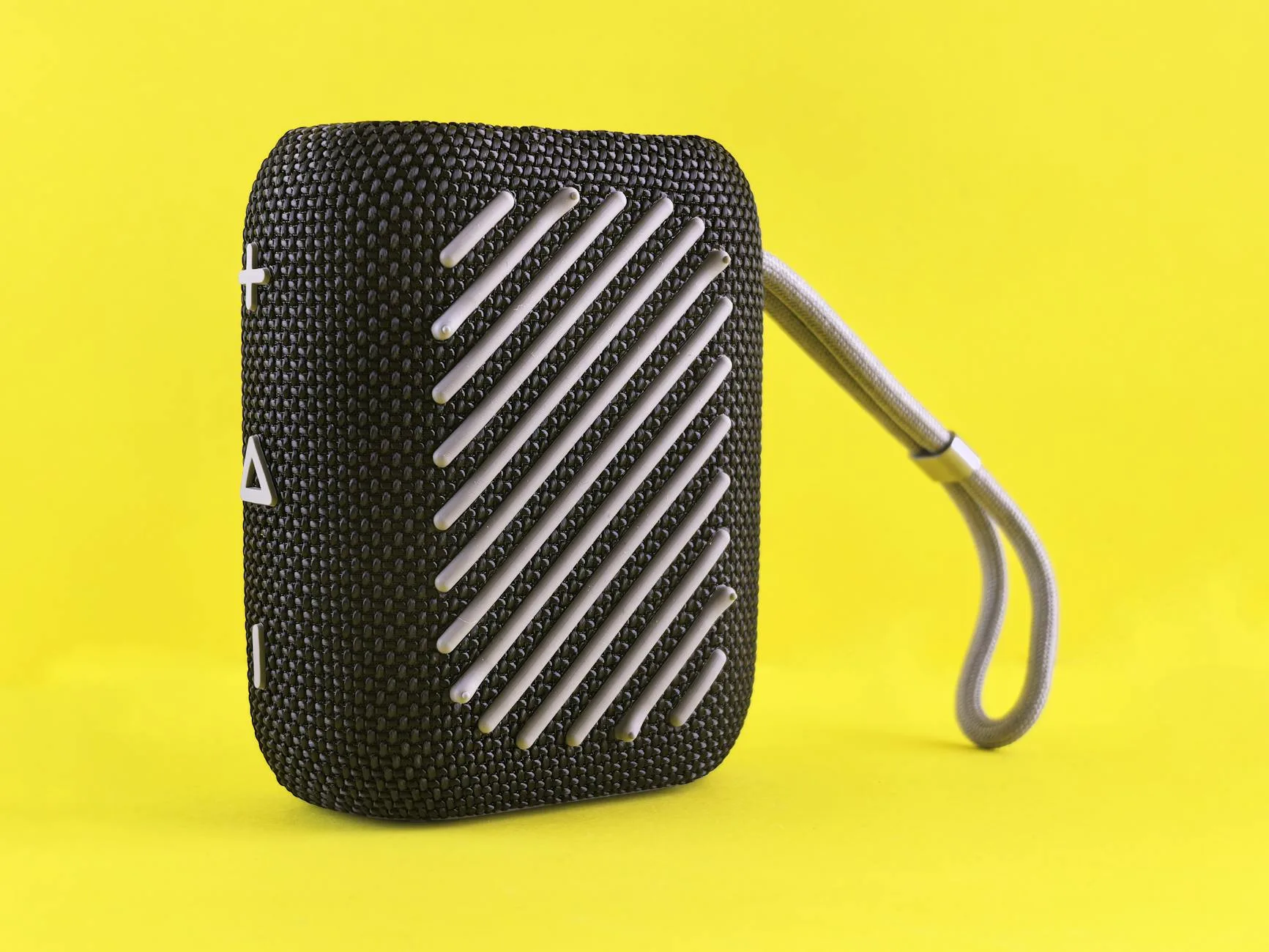
For most UK gardens, portable speakers are the pragmatic choice. Our weather doesn’t guarantee enough outdoor time to justify installed speakers — and portables have reached a quality level that makes the gap smaller than it used to be. If you’re choosing a portable, understanding speaker specifications helps you compare models beyond the marketing claims.
IP Ratings Explained
IP (Ingress Protection) ratings tell you exactly how resistant a speaker is to water and dust. The format is IP followed by two digits.
First Digit: Dust Protection
- 5 — dust-protected (some dust may enter but won’t affect operation)
- 6 — dust-tight (completely sealed against dust)
Second Digit: Water Protection
- 4 — splash-proof (light rain, splashes from any direction)
- 5 — jet-proof (sustained water jets — hose, heavy rain)
- 6 — powerful jet-proof (high-pressure water)
- 7 — submersible (30 minutes at 1 metre depth)
- 8 — continuous submersion (deeper than 1 metre, manufacturer-specified)
What You Need for UK Outdoor Use
IP67 minimum. This handles dust, rain, poolside splashes, and accidental drops into water. IPX5 speakers survive rain but not submersion — and in the UK, speakers get knocked into paddling pools, left out in storms, and generally treated with the same carelessness as garden furniture. IP67 gives you peace of mind.
Sound Quality Outdoors: What Changes
Bass Disappears
Indoor rooms amplify bass through acoustic reflections — the walls, floor, and ceiling create standing waves that boost low frequencies. Outdoors, bass has nothing to reflect off and dissipates rapidly. A speaker that sounds bass-heavy indoors may sound thin and tinny in the garden. This is why outdoor speakers use passive radiators and larger drivers to compensate.
Volume Drops
Sound pressure follows the inverse square law — double the distance and the volume drops by 6dB. In a living room, you’re 2-3 metres from the speaker. In a garden, you might be 5-10 metres away. That distance costs you 6-10dB of volume, which is perceptually halving the loudness. Outdoor speakers need higher maximum output than indoor speakers for the same perceived volume.
Positioning Matters
Place the speaker at ear height if possible — on a table, wall-mounted shelf, or high surface. Ground-level placement loses treble and clarity. Avoid placing the speaker against a fence or wall unless you want that surface to act as a bass reflector (which can sound boomy and unnatural). Our Vinyl Storage Ideas: Shelves, Crates & Cabinets guide is useful alongside this.
Battery Life and Charging
Real-World vs Advertised
Speaker battery claims are tested at 50% volume. At outdoor volumes (typically 70-80%), expect 30-40% less than advertised:
- JBL Charge 5 — 20 hours rated, about 12-14 hours at outdoor volume
- UE Megaboom 4 — 20 hours rated, about 12-15 hours at outdoor volume
- Sonos Roam 2 — 10 hours rated, about 6-7 hours at outdoor volume
- JBL Flip 6 — 12 hours rated, about 7-9 hours at outdoor volume
Charging Tips
- Charge fully the night before — outdoor sessions shouldn’t start at 60%
- USB-C is standard — all current outdoor speakers use USB-C. Carry a cable and power bank for all-day events
- Solar chargers — work in theory but UK summer sun rarely provides enough power to meaningfully charge during use. Treat them as emergency backup, not primary charging
- Don’t leave on charge in direct sun — heat degrades lithium batteries. Charge indoors or in shade
Multi-Speaker Setups for Gardens
Stereo Pairing
Most brands let you pair two identical speakers for stereo. This transforms the outdoor experience — stereo separation across a patio or garden creates a proper sound stage that a single speaker can’t achieve. The JBL and UE ranges handle this natively through their apps.
Party Mode
JBL PartyBoost, UE PartyUp, and Bose SimpleSync let you link multiple speakers across a garden for synchronised playback. Different rooms, different zones, all playing the same music. Useful for larger gardens or parties that move between indoor and outdoor spaces.
The Budget Approach
Two JBL Flip 6s in stereo pair (about £220 total) outperform a single £200 speaker in outdoor quality. The stereo imaging and wider coverage make a bigger difference outdoors than raw bass power. If your budget is £200, consider two smaller speakers over one larger one.
If you’re interested in extending audio into multiple rooms, our guide to multi-room speaker systems covers the indoor side of whole-home audio. And for understanding how Bluetooth speakers compare across both indoor and outdoor use, that roundup covers the broader market.
Looking After Outdoor Speakers
After Each Use
- Wipe down with a damp cloth to remove pollen, sunscreen, and food residue
- Dry the charging port — even waterproof speakers can corrode if the USB-C port stays wet. Blow into it or let it air dry before plugging in
- Bring indoors — leaving speakers outdoors overnight exposes them to dew, temperature drops, and curious wildlife. An IP67 rating means it survives, not that it’s designed for permanent outdoor storage
Seasonal Storage
When summer ends (which in the UK means about September), clean your speaker thoroughly, charge it to 50-60%, and store indoors in a cool, dry place. Don’t store at full charge or completely empty — both stress lithium batteries during long-term storage. According to Which?, proper storage extends speaker battery lifespan by 20-30% compared to leaving them in a cold shed over winter.
When to Replace
Outdoor speakers typically last 3-5 years of regular summer use. Signs of age:
- Battery holds less than half its original capacity — charging twice a day instead of lasting a full session
- Driver distortion at moderate volumes — crackling or buzzing that wasn’t there before
- Physical degradation — peeling rubber, exposed internals, corroded charging port
- Bluetooth connectivity issues — dropping connections or failing to pair. Often a sign of internal moisture damage despite waterproof claims
Frequently Asked Questions
Can I leave a waterproof speaker outside overnight? Technically yes — an IP67 speaker will survive dew, light rain, and temperature drops. But regular overnight exposure degrades materials faster than bringing it indoors. UV, temperature cycling, and moisture all accumulate. Treat the waterproof rating as protection against accidents, not an invitation for permanent outdoor storage.
Do outdoor speakers sound worse than indoor ones at the same price? Different, not worse. Outdoor speakers prioritise volume, bass compensation, and durability over the refined detail that indoor speakers focus on. A £150 outdoor speaker won’t match a £150 bookshelf speaker for nuance and imaging — but the bookshelf speaker won’t survive a rain shower or fill a garden. They’re designed for different environments.
How loud do I need an outdoor speaker to be? For a small patio (2-4 people), 80dB at 1 metre is adequate. For garden parties (10+ people, conversation noise), you need 90dB+ to be heard over the ambient noise. Most speakers in the £100-200 range achieve 85-95dB, which covers most garden situations comfortably.
Is it worth buying two speakers for stereo outdoors? Yes — and the difference is more pronounced outdoors than indoors. Two speakers placed 3-4 metres apart create genuine stereo width that a single speaker can’t achieve. The coverage area also doubles, which matters in a garden where people spread out. Two £100 speakers often outperform one £200 speaker outdoors.
Can I use my indoor Sonos speakers outdoors? Only the Sonos Roam and Move are rated for outdoor use (IP67 and IP56 respectively). Standard Sonos speakers (Era 100, Era 300, Five) are not weather-rated and will be damaged by moisture, dust, and direct sun. Don’t risk them outdoors even in dry weather — one unexpected shower is all it takes.