If you want wireless headphones under £50, start with the Sony WH-CH520 for a light on-ear fit, multipoint connection and app EQ. The JBL Tune 520BT is another on-ear choice and currently costs less; check its stock. Choose the Soundcore Q20i when active noise cancellation matters more than portability, or one of the two wired pairs if you would rather avoid charging altogether.
Our top 5 picks
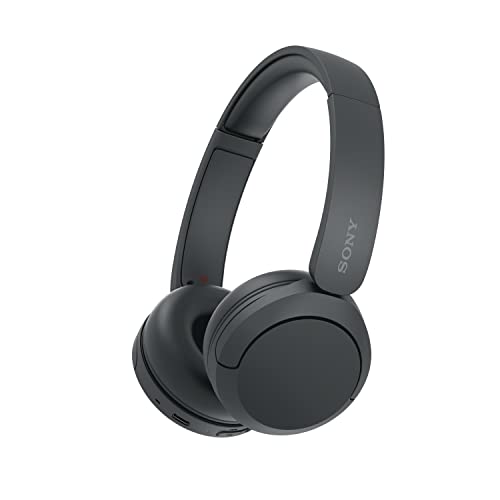
Everyday wireless — Sony WH-CH520
On-ear Bluetooth with app EQ and a quoted 50-hour battery; no ANC.
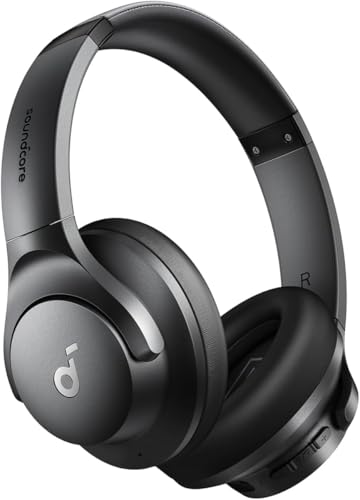
Noise-cancelling — Soundcore Q20i
Over-ear ANC and an adjustable sound profile; larger to carry.

Lower-cost wireless — JBL Tune 520BT
Folding on-ear design and app EQ; check stock before ordering.

Wired desk use — Audio-Technica ATH-M20x
Closed-back over-ear monitoring with a long fixed cable.

Low-cost wired spare — Sony MDR-ZX110AP
Folding on-ear pair with a 3.5mm plug and inline microphone.
In this guide
- Comparison at a glance
- Five budget headphones reviewed
- Which headphones should you buy?
- Wired, wireless and ANC
- Fit, sound and everyday use
- Buying checks before you order
- How we chose
- The bottom line
- Frequently asked questions
Comparison at a glance
| Headphones | Best for | Format | Main trade-off |
|---|---|---|---|
| Sony WH-CH520 | Everyday wireless | On-ear; Bluetooth; no ANC | On-ear fit and no ANC |
| Soundcore Q20i | Best noise-cancelling | Over-ear; Bluetooth; hybrid ANC | Bulkier; ANC cannot remove every sound |
| JBL Tune 520BT | Lower-cost wireless | On-ear; Bluetooth; no ANC | On-ear pressure and bass-led tuning |
| Audio-Technica ATH-M20x | Best wired sound/monitoring | Over-ear; wired; closed-back | Fixed cable and no wireless use |
| Sony MDR-ZX110AP | Best ultra-budget wired | On-ear; wired; inline mic | Basic build and limited isolation |
The key split is simple: Sony and JBL are portable on-ear wireless models, Soundcore adds over-ear cushions and ANC, while both wired pairs trade wireless convenience for immediate plug-in use. Check that your phone, tablet or laptop has the required 3.5mm output before choosing a wired model.
The five best budget headphones
1. Sony WH-CH520: everyday wireless
The WH-CH520 is a practical starting point for everyday wireless listening. It is a lightweight Bluetooth on-ear model with physical controls, microphone, multipoint connection and support for Sony’s app-based EQ. Sony quotes up to 50 hours of playback, with quick charging available when the battery is low.
The cups sit on the ears rather than around them, so pressure and heat tolerance are personal. There is no active noise cancellation and no analogue cable mode. The sound can be adjusted in the app, but no setting guarantees a preferred tonal balance for every listener.
- Buy it if: you want an easy wireless all-rounder with long quoted battery life.
- Skip it if: you need ANC, an over-ear seal or wired backup.
- Main compromise: useful wireless features in a basic on-ear design.
2. Soundcore Q20i: best noise-cancelling
The Q20i is the feature-heavy choice. It uses an over-ear folding design, Bluetooth, hybrid active noise cancellation, transparency mode and app EQ. Soundcore quotes up to 40 hours with ANC and 60 hours without it, making it more suitable than the on-ear models for buyers who prioritise isolation and longer sessions.
ANC is strongest against steady low-frequency noise; voices, sudden sounds and higher frequencies can still get through. Fit affects both bass and cancellation, while larger cups make this model less compact. The tuning is bass-forward by default, although the app provides adjustment.
- Buy it if: reducing steady travel or office noise is the main goal.
- Skip it if: compact size or a neutral wired presentation matters more.
- Main compromise: the broadest feature set here in a bulkier package.
3. JBL Tune 520BT: lower-cost wireless
The Tune 520BT is another on-ear wireless option, currently priced below the WH-CH520. It is an on-ear folding model with Bluetooth 5.3, microphone, multipoint support and app access. JBL quotes up to 57 hours of playback, and the compact format suits bags and commuting better than a large over-ear pair.
JBL markets its Pure Bass character, so listeners seeking a restrained low end may prefer the Sony app controls or wired Audio-Technica. On-ear pressure varies, and this model has no ANC or wired listening mode. Quoted battery duration will change with volume, calls and connection behaviour.
- Buy it if: you want affordable wireless headphones with a longer quoted battery figure than the Sony.
- Skip it if: you prefer over-ear cushions, ANC or neutral monitoring.
- Main compromise: wireless features with a bass-led on-ear format.
4. Audio-Technica ATH-M20x: best wired sound and monitoring
The ATH-M20x is the serious wired option. Its closed-back over-ear design and 3m cable suit desks, keyboards, audio interfaces and home recording where Bluetooth delay and battery management are unwanted. It is intended for monitoring rather than portable wireless convenience.
A long fixed cable is useful at a desk and awkward on a train. There is no microphone, ANC, app or wireless mode, and many modern phones need a USB-C or Lightning adapter. Closed-back monitoring headphones can also feel warm during long sessions.
- Buy it if: wired music, editing or entry-level monitoring is the priority.
- Skip it if: you need calls, commuting convenience or a short detachable cable.
- Main compromise: focused wired use with limited everyday portability.
5. Sony MDR-ZX110AP: best ultra-budget wired
The MDR-ZX110AP is the simplest recommendation here. It has a wired 3.5mm connection, folding swivel cups and an inline microphone, so it works for compatible laptops, controllers and older phones without charging or pairing. The low price also makes it easier to justify as a spare pair.
This is a basic lightweight on-ear design with modest isolation and no premium build claims. Device compatibility for the inline remote can vary, and the cable is not detachable. Buyers wanting fuller cushions or stronger passive isolation should spend more on an over-ear model.
- Buy it if: you need an inexpensive wired pair with an inline mic.
- Skip it if: durability, isolation or wireless freedom matters.
- Main compromise: minimal cost with correspondingly basic construction and comfort.
Which headphones should you buy?
Choose the Sony WH-CH520 if its lightweight on-ear format, multipoint and app EQ suit your daily listening. JBL offers a comparable on-ear format and a longer quoted battery figure; choose it if its bass-led tuning and current price suit you better, but check stock. Choose the Soundcore Q20i for flights, trains or shared offices where reducing steady background noise matters more than compactness.
The JBL Tune 520BT is another compact wireless option when its current price makes sense. Choose the ATH-M20x for a desk, instrument or audio interface, and the MDR-ZX110AP as a cheap wired spare with a microphone. If your priority is an in-ear format, see our earbuds for small ears guide rather than forcing an over-ear recommendation to fit.
Wired, wireless and ANC
Wired versus wireless
Wired headphones start immediately, avoid charging and usually have negligible connection delay. That suits instruments, editing and controllers. Wireless headphones remove the cable and support phone calls and movement, but depend on codec, device and battery state. For a deeper overview, read our headphone buying guide.
Bluetooth latency is usually acceptable for music and video because devices can compensate, but gaming, live instruments and recording are less forgiving. Multipoint can make switching between two devices easier, although behaviour differs by operating system and app.
What budget ANC can do
Active noise cancellation uses microphones and processing to reduce external sound. It is most effective against continuous engine, fan and rumble noise, not every voice or sudden event. Our ANC explainer covers the limits. Never use isolation so aggressively that you miss traffic, announcements or warnings.
Fit, sound and everyday use
On-ear versus over-ear
On-ear models are lighter and smaller but press directly on the ears. Over-ear cups surround the ears and can provide better passive isolation, although they are bulkier and may feel warmer. Head shape, glasses, hair and clamp force all change comfort, so published descriptions cannot settle the question for you.
Sound signatures and EQ
Budget headphones often emphasise bass because it creates an immediate impression. App EQ can help, but it cannot fix poor fit or make one driver behave like another. Source-file differences matter less than fit and tuning at this price; our audio file-formats guide explains when formats become relevant.
Calls and microphones
Built-in microphones are useful for ordinary calls, but clarity changes with wind, room echo, background noise and device processing. None of these models should be treated as a guaranteed broadcast microphone. The wired ATH-M20x has no microphone, while the MDR-ZX110AP uses an inline one.
Listening level matters
No headphone price makes excessive volume safe. Use the lowest comfortable level, take breaks and pay attention to ringing or muffled hearing. Strong isolation can make lower listening levels easier, but awareness of your surroundings remains important outdoors.
Buying checks before you order
Check your connectors
A 3.5mm plug is no longer universal. Many recent phones use USB-C or Lightning only, and a passive adapter may not work if the device expects its adapter to contain a digital-to-analogue converter. Check the exact phone, tablet, laptop, controller or audio interface rather than assuming “wired” means compatible. The ATH-M20x is designed around a longer studio-style cable, while the Sony MDR-ZX110AP is easier to use close to a laptop or handheld device.
Wireless compatibility is broader, but features still vary. Multipoint support may require a particular app setting, and microphone behaviour can change between phone calls, video meetings and game chat. A Bluetooth connection also does not guarantee that every button or voice-assistant feature works identically across Android, iOS, Windows and smart televisions.
Battery and charging
Quoted playback time is useful for comparison, not a timetable. Volume, ANC, calls, codec, temperature and battery age all affect duration. Fast-charge figures also depend on the charger and starting battery level. Neither wireless model should be stored permanently empty or left charging in excessive heat. Use a suitable cable and follow the manufacturer’s charging instructions rather than relying on a generic routine.
A replaceable cable can extend the useful life of wired headphones, but the two wired models here use fixed cables. Wireless pairs add battery ageing and electronic faults to the possible failure points. That does not make wired models indestructible: hinges, headbands, plugs and cable entries still need careful handling.
Returns, spares and cushions
Fit is difficult to judge from dimensions, so read the retailer’s current returns conditions before opening or extensively using headphones. Hygiene exclusions can apply. Also check whether replacement ear pads are available and whether they are designed for the exact model. Third-party cushions can change comfort, isolation and sound balance, sometimes substantially.
Fold headphones only at the intended hinges and use a case or separate bag pocket when travelling. Loose storage beside keys, chargers and drink bottles is a common route to scratched cups, strained cables and damaged pads. A cheap pair treated carefully can outlast a more expensive pair thrown into a bag every day.
What spending more can change
Moving above £50 can buy stronger construction, larger cushions, better microphones, more refined ANC, additional codecs or replaceable parts, but price alone guarantees none of them. If the basic Sony or JBL already meets your needs, spending more may add features you never use. If you wear headphones for an entire working day, comfort and serviceable cushions can justify a larger budget more than a small sound-quality difference.
Our wireless-headphones guide covers higher-price options when stronger ANC, more codecs or premium construction matter.
How we chose
We compared these UK models by connection type, wearing style, active noise cancellation, controls, microphone provision, quoted battery life, charging, portability and intended use. The shortlist deliberately includes wireless on-ear, wireless over-ear ANC and wired choices rather than five near-identical Bluetooth models.
This is a specification-led comparison, not a claim of hands-on testing. Sound balance, comfort, call quality, ANC performance and wireless stability depend on fit, device, environment, hearing and personal preference. Manufacturer battery figures are measured under particular settings and should be treated as maximum claims rather than guaranteed listening time.
All five were below £50 when this guide was updated, but prices and stock can move. The useful decision is the feature set, not a temporary saving: wired models avoid charging and Bluetooth latency, while wireless models prioritise movement and convenience.
The bottom line
The Sony WH-CH520 is a good starting point for lightweight wireless use, while the JBL Tune 520BT is worth comparing for its current price and longer quoted battery life; check JBL stock. Move to Soundcore Q20i for ANC, JBL Tune 520BT for cheaper wireless listening, Audio-Technica ATH-M20x for wired monitoring, or Sony MDR-ZX110AP for a very low-cost wired spare. Check the current price and device connection before ordering.
Frequently Asked Questions
What are the best headphones under £50?
The Sony WH-CH520 is a practical everyday wireless starting point here. Soundcore Q20i is better when ANC matters, while Audio-Technica ATH-M20x suits wired desktop and monitoring use.
Are wireless headphones under £50 any good?
Yes, for everyday music, podcasts and calls. Expect compromises in materials, microphone performance, codec choice and isolation compared with premium models.
Do cheap headphones have noise cancellation?
Some do. The Soundcore Q20i includes hybrid ANC, but budget cancellation reduces steady noise rather than creating silence or removing every voice.
Are wired headphones better than wireless?
Wired models avoid charging and Bluetooth delay, while wireless models offer greater movement and phone convenience. The better choice depends on the device and use.
Which budget headphones are best for gaming?
A wired model is usually easiest for low latency. Check microphone needs, connector compatibility and console support before buying.
How long should budget headphones last?
There is no dependable fixed lifespan. Cable strain, hinges, cushions, battery ageing, storage and parts availability all affect how long a pair remains useful.