You’ve just bought a pair of bookshelf speakers that got rave reviews online. You set them up in your spare room, hit play, and… they sound thin and lifeless. Or the opposite — you’ve got a massive floorstander pumping out so much bass that your living room sounds like the inside of a subwoofer, rattling the picture frames and drowning out the mids. The speakers aren’t bad. They’re just wrong for the room.
Matching speakers to room size is the single most overlooked step in buying audio equipment. I’ve spent years testing speakers in different rooms and the same pair can sound completely different depending on where you put them. A £300 bookshelf speaker in the right room will outperform a £1,000 floorstander in the wrong one. Here’s how to get it right first time.
In This Article
- Why Room Size Matters More Than You Think
- Measuring Your Room the Right Way
- Small Rooms: Under 15 Square Metres
- Medium Rooms: 15 to 25 Square Metres
- Large Rooms: Over 25 Square Metres
- Speaker Types and Which Rooms They Suit
- Room Acoustics: The Hidden Factor
- Placement Rules for Any Room
- Amplifier Matching for Your Room
- Common Mistakes and How to Fix Them
- Frequently Asked Questions
Why Room Size Matters More Than You Think
The Physics Behind It
Sound waves behave differently depending on the space they’re filling. In a small room, bass frequencies build up because the wavelengths are close to the room dimensions — creating “room modes” that boost certain frequencies unnaturally. In a large room, those same bass waves dissipate before they reach your ears, leaving the sound thin and lacking warmth.
This isn’t subtle. I’ve moved the same pair of Q Acoustics 3020i speakers from a 3m x 3m home office into a 5m x 7m living room, and they sounded like two completely different products. In the office, the bass was full (almost too much), the imaging was precise, and everything sounded detailed. In the living room, they sounded lost — like they were working too hard and not filling the space.
What Happens When You Get It Wrong
- Speakers too powerful for the room — bass builds up in corners, everything sounds boomy and muddy, you can’t hear vocals clearly
- Speakers too small for the room — thin, fatiguing sound because you’re cranking the volume to compensate, losing dynamics and detail
- Wrong placement for the speaker type — rear-ported speakers too close to walls, creating a one-note bass boom
- Wasted money — buying flagship speakers for a bedroom where compact monitors would sound better
Measuring Your Room the Right Way
Calculate Your Room Volume
You need three measurements:
- Length of the room in metres
- Width of the room in metres
- Ceiling height (standard UK homes are 2.4m, Victorian properties can be 2.7-3m)
Multiply all three together for your room volume in cubic metres.
Quick Size Categories
- Small: Under 30 cubic metres (typical bedroom, home office, box room)
- Medium: 30-60 cubic metres (average UK living room, larger bedroom)
- Large: Over 60 cubic metres (open-plan kitchen-diner, converted loft, period property living room)
Don’t Forget Room Shape
Square rooms are acoustically the worst — they create symmetrical standing waves that pile up at the same frequencies. Rectangular rooms distribute resonances more evenly. L-shaped rooms, rooms with alcoves, or open-plan spaces that connect to hallways behave differently again.
An L-shaped living room might measure 25 square metres total but sound much larger because the sound energy disperses into the connected space. Factor this in.
Small Rooms: Under 15 Square Metres
What Works
Small rooms are the easiest to get right because the speakers don’t need to work hard. A modest pair of bookshelf speakers will fill the space completely, and you’ll hear details that get lost in bigger rooms.
Recommended specifications:
- Driver size: 4-5 inch woofer maximum
- Sensitivity: 84-87 dB (lower sensitivity is fine — you won’t need much power)
- Power handling: 25-75W
- Ported or sealed: Front-ported or sealed designs strongly preferred
Best Picks for Small Rooms
- Q Acoustics 3020i (about £200) — the gold standard for small rooms. Front-ported so they work close to walls, neutral sound, fantastic imaging
- Wharfedale Diamond 12.1 (about £180) — slightly warmer than the Q Acoustics, rear-ported but works from about 20cm from a wall
- KEF Q150 (about £250) — Uni-Q driver gives wider sweet spot, brilliant in near-field desk setups
What to Avoid in Small Rooms
- Floorstanding speakers — you’ll be drowning in bass with no way to tame it
- Large bookshelf speakers (6.5″+ woofer) — too much output for the space
- Subwoofers — in a room under 15 square metres, a decent bookshelf speaker produces enough bass. Adding a sub just causes boom
- Rear-ported speakers hard against the wall — the port needs breathing room or bass distorts
Medium Rooms: 15 to 25 Square Metres
What Works
This is where most UK living rooms fall, and it’s the most forgiving size range. You’ve got enough space for bookshelf speakers on stands or modest floorstanders, and enough air volume that bass doesn’t pile up too badly.
Recommended specifications:
- Driver size: 5-6.5 inch woofer
- Sensitivity: 86-89 dB
- Power handling: 50-150W
- Speaker type: Large bookshelf on stands OR slim floorstanders
Best Picks for Medium Rooms
- Dali Oberon 3 (about £350) — large bookshelf that bridges the gap between stand-mount and floor-stander performance. Rich, musical sound
- Q Acoustics 3050i (about £500) — slim floorstander that works in medium rooms without overpowering. Needs about 30cm from rear wall
- Wharfedale Evo 4.2 (about £450) — AMT tweeter gives incredible detail, pairs beautifully with a 50W+ integrated amp
- Monitor Audio Bronze 200 (about £400) — compact floorstander with tight, controlled bass
The Sweet Spot Setup
In a medium room, I’ve found the best results with speakers placed about 60-80cm from the rear wall, toed in slightly toward the listening position, forming an equilateral triangle with your head. The listening position should be about 60% of the way back from the speakers — not hard against the back wall. I tested this obsessively in my own living room (about 18 square metres) and the difference between the 60% and 80% positions was night and day for imaging.
Large Rooms: Over 25 Square Metres
What Works
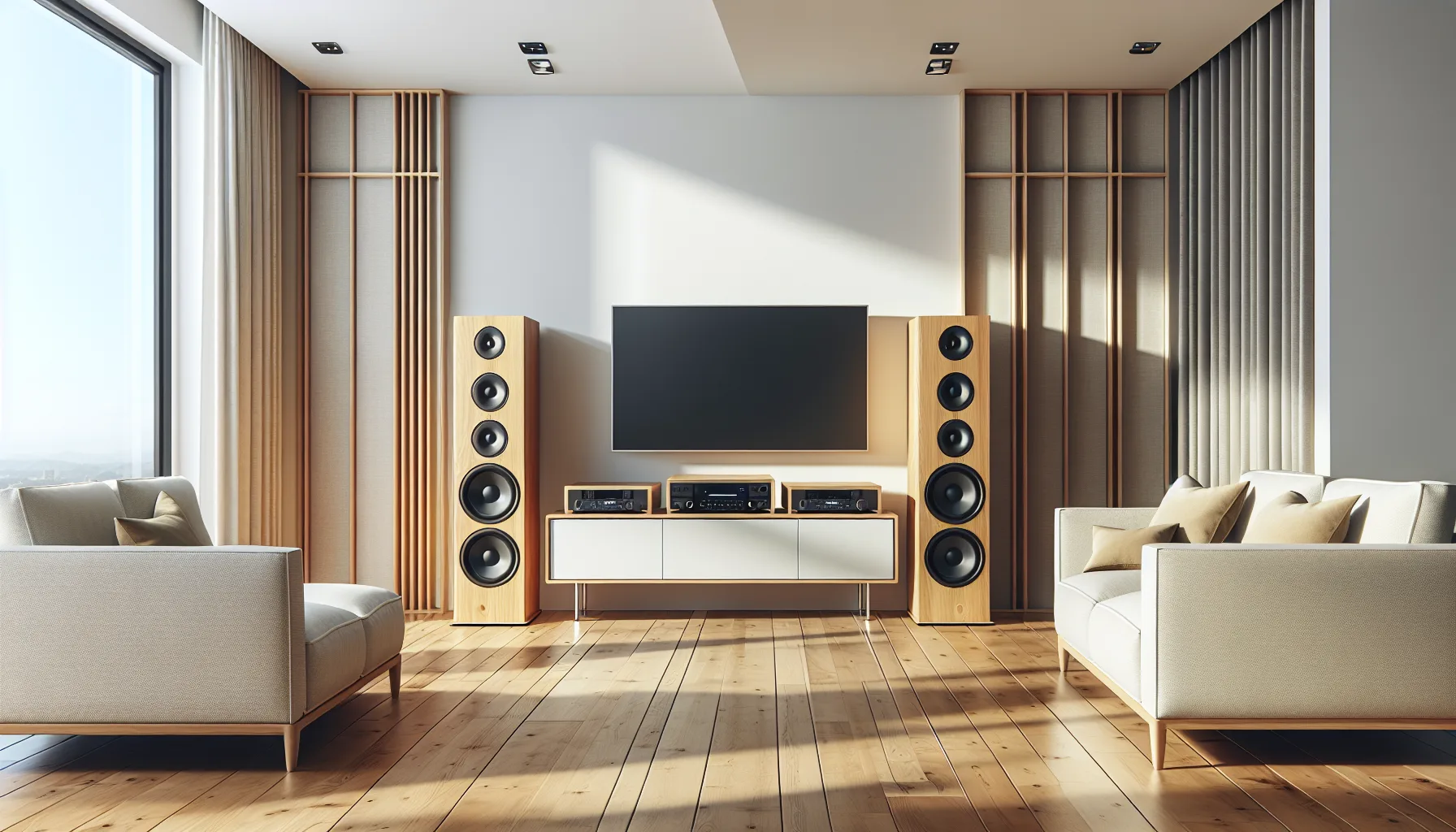
Large rooms need speakers that can genuinely move air. This is where floorstanders earn their keep — they have the driver area, cabinet volume, and bass extension to fill a big space without strain. Bookshelf speakers in a large room sound like they’re shouting from across the street.
Recommended specifications:
- Driver size: 6.5-8 inch woofer (or multiple drivers)
- Sensitivity: 88-92 dB (higher efficiency means less amplifier strain)
- Power handling: 100-250W
- Speaker type: Full-size floorstanders or large bookshelf speakers with a subwoofer
Best Picks for Large Rooms
- KEF R5 Meta (about £1,200) — three-way design with excellent bass extension down to 38Hz. Fills large rooms effortlessly
- Dali Oberon 7 (about £800) — two 7-inch woofers give genuine bass authority without a sub
- Q Acoustics Concept 50 (about £1,000) — dual 6.5-inch woofers in an elegant cabinet, surprisingly good value
- Monitor Audio Silver 300 (about £1,200) — room-filling scale with impressive detail
When You Need a Subwoofer
In large rooms, even good floorstanders can lack the very lowest octave (below 40Hz). Adding a musical subwoofer fills this in without turning everything into a bass festival. The best way to integrate a sub is to cross it over at 60-80Hz so it supports rather than dominates. For a related angle, see our How to Soundproof a Room for Better Audio guide.
- REL T/7x (about £600) — the gold standard for music subwoofers, connects via speaker-level input
- SVS SB-1000 Pro (about £500) — tighter, more musical than most home cinema subs
Speaker Types and Which Rooms They Suit
Bookshelf / Stand-Mount Speakers
- Best for: Small to medium rooms (under 20 square metres)
- Advantages: Precise imaging, easier to position, front-ported options work near walls
- Limitations: Limited bass extension, need stands (add £100-200)
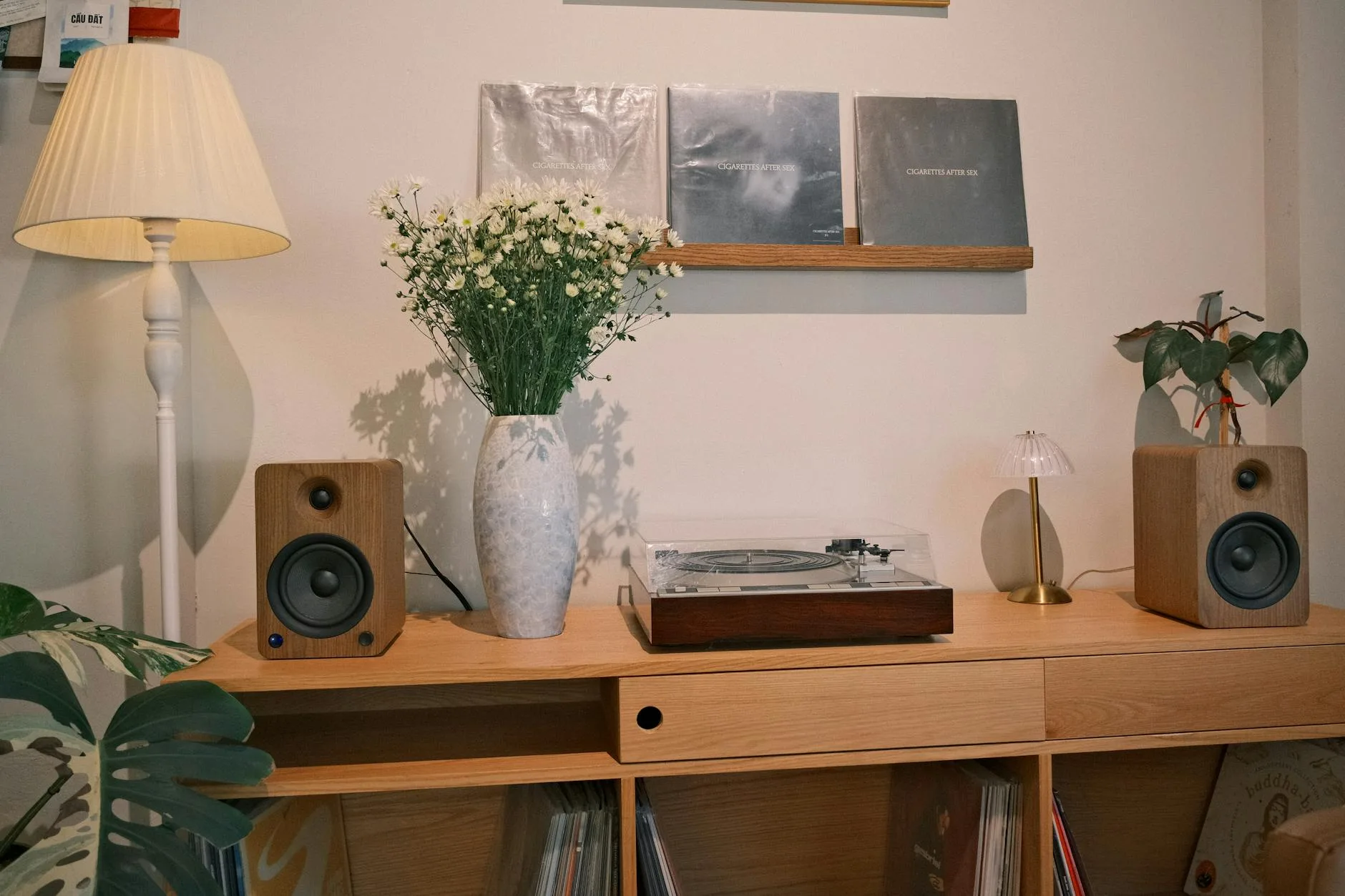
- Stand tip: Speaker stands should place the tweeter at ear height when seated. Don’t put bookshelf speakers on actual bookshelves unless they’re specifically designed for it
Floorstanding Speakers
- Best for: Medium to large rooms (15+ square metres)
- Advantages: Full frequency range, no need for stands, visual impact
- Limitations: Need space around them, can overwhelm small rooms, rear-ported models need 30cm+ from walls
- Placement tip: Floorstanders need more careful positioning than bookshelf speakers — every 5cm closer to a wall changes the bass balance
Active / Powered Speakers
- Best for: Any room (matched amp built in)
- Advantages: No separate amplifier needed, often room-correction DSP built in, perfectly matched components
- Limitations: Less upgradable, power cable to each speaker
- Room consideration: Active speakers with built-in DSP (like KEF LS50 Wireless II or Kef LSX II) can adapt to room acoustics automatically — making them the most forgiving option for tricky rooms
Room Acoustics: The Hidden Factor
Hard Surfaces vs Soft Furnishings
A room’s acoustic character depends on what’s in it. Two rooms with identical dimensions can sound completely different:
- Hard surfaces (wooden floors, large windows, bare walls, leather sofas) reflect sound, creating brightness and a reverberant character. Speakers sound louder but less controlled
- Soft furnishings (carpet, curtains, fabric sofas, bookshelves full of books) absorb sound, reducing reflections. Speakers sound warmer but may lack energy
The British Standards Institution provides guidelines for room acoustics in residential spaces, though most people find that a mix of hard and soft surfaces (typical UK living room) works fine without treatment.
First Reflection Points
The most important acoustic consideration for any room: where do sound waves first bounce off walls, floor, and ceiling on their way to your ears? These “first reflection points” can smear imaging and add harshness.
Simple test: sit in your listening position and have someone slide a mirror along the side wall. When you can see the speaker’s tweeter in the mirror — that’s your first reflection point. A bookshelf, curtain, or acoustic panel there makes a noticeable difference.
Bass Traps and Room Treatment
You don’t need a professional studio setup. Even in a normal living room:
- Corner bass traps — thick curtains in room corners, bookcases filled with books, or purpose-built traps tame the worst bass build-up
- Rug on hard floor — a large rug between speakers and listening position reduces floor reflections noticeably
- Curtains over large windows — glass is acoustically terrible. Heavy curtains make more difference than any speaker upgrade under £300
Placement Rules for Any Room
The Equilateral Triangle
Your two speakers and your head should form an equilateral triangle. If your speakers are 2 metres apart, sit 2 metres from each speaker. This gives the best stereo imaging regardless of room size. Our Multi-Room Speaker Systems: A Beginner’s Guide guide is useful alongside this.
Distance from Walls
- Rear wall: Minimum 20cm for front-ported speakers, 30cm+ for rear-ported speakers. Every centimetre closer adds bass (which may or may not be desirable)
- Side walls: At least 50cm. Closer creates early reflections that smear imaging
- Asymmetric placement (one speaker close to a corner, one in open space) is worse than consistently imperfect placement
Toe-In
Angling speakers inward toward your head (toe-in) narrows the sweet spot but improves focus and imaging. Start with speakers pointing straight ahead, then toe in 5 degrees at a time until the centre image snaps into focus. Most speakers sound best at 10-20 degrees of toe-in.
Height
Tweeters at ear height when seated. Too high and you lose detail. Too low and the sound feels disconnected from the stereo image. This is why bookshelf speakers need dedicated stands rather than sitting on a TV unit.
Amplifier Matching for Your Room
Why It Matters
Your amplifier needs to drive your speakers properly for your room size. A small room with efficient speakers (90dB sensitivity) might only need 30W. A large room with inefficient speakers (84dB) might need 150W+ to sound dynamic at moderate listening levels.
Quick Matching Guide
- Small room + high-sensitivity speakers (88dB+): 30-50W is plenty. A budget integrated like the Cambridge AXA35 (about £250) works perfectly
- Medium room + average-sensitivity speakers (85-88dB): 50-80W. Look at the Rega io (about £350) or Marantz PM6007 (about £400)
- Large room + low-sensitivity speakers (under 85dB): 100W+. Consider the Cambridge CXA81 (about £800) or NAD C 388 (about £1,100)
Current Delivery Matters More Than Wattage
A 50W amplifier with high current delivery will control speaker drivers better than a 100W amp with weak current. For rooms where bass control matters (medium and large rooms), look for amplifiers with: We cover a similar decision in Best Kids Headphones 2026: Volume Limited & Safe.
- High damping factor (100+)
- Toroidal transformer (better current delivery)
- Stable into 4 ohm loads (ensures performance with demanding speakers)
Common Mistakes and How to Fix Them
Buying by Specifications Alone
Paper specs tell you almost nothing about how speakers sound in your room. A speaker with ruler-flat frequency response in an anechoic chamber will sound different in every real room. Always audition if possible — take your shortlist to Richer Sounds or a local hi-fi dealer and listen.
Ignoring the Partner Factor
Speakers need to live in your home. Giant floorstanders might sound amazing but if they dominate the living room, create arguments, and get pushed into corners (where they’ll sound terrible), you’ve wasted your money. I’ve learned from experience that the best speaker is one that sounds good AND gets approved for placement in the optimal position. Slim floorstanders and compact bookshelf speakers on stylish stands often win this battle.
Skipping Room Treatment for Expensive Speakers
Spending £2,000 on speakers in a bare, hard-floored room with glass walls will sound worse than £500 speakers in a well-treated room. Always budget for the room alongside the speakers:
- £50-100: Heavy curtains + large rug
- £100-200: Add corner bass traps (GIK Acoustics do affordable panels)
- £200-500: First reflection panels + additional absorption
Not Listening at Your Actual Volume
Demo rooms play music louder than you’d listen at home. Speakers that sound brilliant at 85dB might sound thin and lifeless at your typical 65-70dB listening level. Audition at the volume you’ll actually use — especially late at night when most of your listening happens.
Forgetting About Rear Ports
About 70% of bookshelf speakers are rear-ported. If your only placement option is a bookshelf or TV unit against a wall, you need front-ported or sealed designs. Stuffing a rear port with foam is a compromise, not a solution — it changes the frequency response in unpredictable ways.
Frequently Asked Questions
Can I use floorstanding speakers in a small room? Technically yes, but you’ll likely battle excessive bass and a boomy sound. The room can’t absorb the energy that large woofers produce. If you already own floorstanders and have a small room, try pulling them well away from walls (50cm+) and adding bass trapping in corners. But if buying fresh, choose bookshelf speakers — they’ll sound better in a small space.
Do I need a subwoofer with bookshelf speakers? In a small room (under 15 square metres), probably not — room gain naturally reinforces bass. In a medium room, it depends on the speakers and your taste. In a large room with bookshelf speakers, yes — you’ll notice the lack of foundation below 60Hz. Cross the sub over low (60-80Hz) so it fills in the bottom without drawing attention to itself.
How much should I spend on speakers relative to my amplifier? The old rule was 50% of your budget on speakers. That’s still roughly right, but speaker-to-amp matching matters more than raw cost. A £200 amplifier driving £500 speakers will sound better than a £500 amplifier driving £200 speakers in most cases. Prioritise the speakers, then match an appropriate amp.
Will speakers sound better after breaking in? There’s modest truth to this — new speaker surrounds loosen over about 20-50 hours of playing, which can slightly extend bass response. But the difference is subtle, not transformative. If speakers sound wrong in your room after a week, break-in won’t fix a fundamental mismatch. Trust your ears.
Is it worth paying for in-store speaker demos? Most UK hi-fi dealers (Richer Sounds, Sevenoaks, independent shops) offer free demonstrations — you just need to book a slot. Bring your own music on USB or your phone. It’s worth the trip, especially for purchases over £300 where a room mismatch could mean hundreds wasted.