The best Bluetooth speaker depends first on where it will live. The JBL Charge 6 is the most useful starting point for a speaker you will carry between rooms, garden and trips: it has a substantial quoted battery life, IP68 protection and can top up a phone. If it will stay on a shelf, the mains-powered Sonos Era 100 is the more logical home choice. These are different jobs, not six versions of the same speaker.
Our top 6 picks

Best all-round portable — JBL Charge 6, black.
A useful balance of battery life, weather protection and phone charging.

Best lighter portable — JBL Flip 7, blue.
A smaller carry than the Charge 6, with less battery endurance.

Best pocket-sized speaker — JBL Go 4, red.
The smallest choice for travel and close-range listening.

Best portable Sonos bridge — Sonos Roam 2, black.
Battery-powered Bluetooth outdoors and Wi-Fi integration at home.

Best home speaker — Sonos Era 100, black.
A mains-powered speaker for a fixed room and Sonos multi-room use.

Best for spatial music at home — Sonos Era 300, black.
A larger mains-powered choice if supported Dolby Atmos music matters.
In this guide
- Comparison at a glance
- Portable speakers reviewed
- Home speakers reviewed
- How to choose
- Bluetooth, Wi-Fi and multi-room
- How we chose
- The bottom line
- Frequently asked questions
Comparison at a glance
| Exact variant | Best use | Power / connection | Weather rating | Main compromise |
|---|---|---|---|---|
| JBL Charge 6, black | Everyday portable | Up to 24h; Bluetooth; power bank | IP68 | Bigger and heavier than Flip or Go |
| JBL Flip 7, blue | Lighter portable | Up to 14h; Bluetooth | IP68 | Less endurance; no phone power bank |
| JBL Go 4, red | Tiny travel speaker | Up to 7h; Bluetooth | IP67 | Less output for open spaces |
| Sonos Roam 2, black | Portable with Sonos at home | Up to 10h; Bluetooth and Wi-Fi | IP67 | Shorter rated battery than Charge |
| Sonos Era 100, black | Fixed home listening | Mains; Bluetooth and Wi-Fi | No outdoor IP rating | No battery; needs a socket |
| Sonos Era 300, black | Supported spatial music | Mains; Bluetooth and Wi-Fi | No outdoor IP rating | Larger, dearer and source-dependent |
Battery figures are manufacturer maximums, not a promise at high volume. IP ratings are resistance classifications, not permission to leave a speaker wet indefinitely. No Sonos Era model here has a battery or a portable weather rating. Check the variant, finish and current price before buying; prices and availability move.
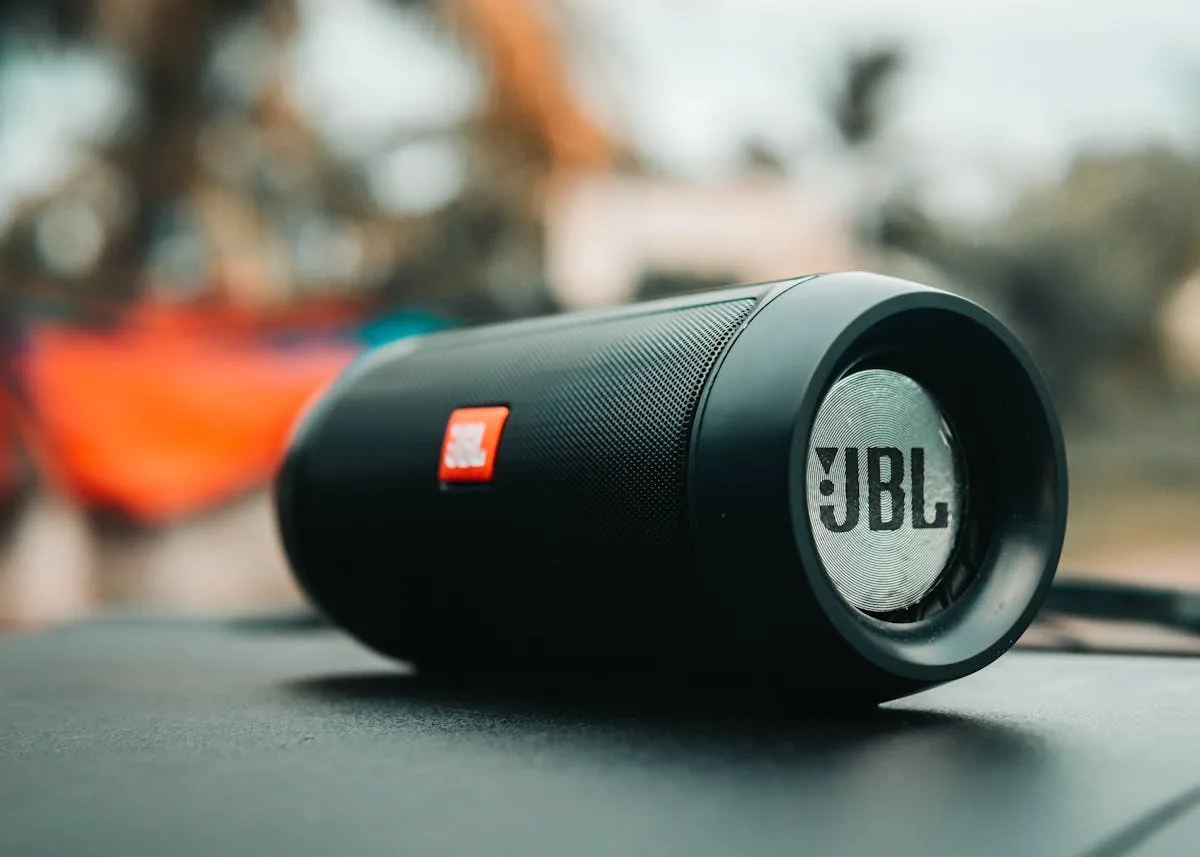
Portable speakers reviewed
1. JBL Charge 6, black: best all-round portable
The Charge 6 is the all-rounder because it combines a useful carry size with features the smaller models lose. JBL quotes up to 24 hours of standard playback, with a further four hours available through Playtime Boost; the latter is a different mode, not its ordinary battery figure. IP68 dust and water resistance and a built-in phone power bank make sense for garden days and travel. JBL’s Charge 6 specifications confirm those features.
It is not a pocket speaker. At roughly 1.37kg it asks for bag space, and battery life will vary with level, source and charging a phone. Choose the Flip 7 when weight matters more than the extra endurance and power bank.
2. JBL Flip 7, blue: best lighter portable
The blue Flip 7 is the simpler everyday carry. JBL quotes up to 14 hours of normal playback and an optional two-hour Playtime Boost, with IP68 protection. It is the better choice when you move often and do not need the Charge 6 to refill a phone. Its shape is easier to pack than a larger home speaker, and it still covers a kitchen, small room or picnic use case.
Do not treat it as a cheaper Charge with identical facilities. The standard battery figure is shorter and there is no built-in phone power-bank role. If you mainly listen from a fixed shelf, compare the Era 100 rather than paying for portability you will never use.
3. JBL Go 4, red: best pocket-sized speaker
The red Go 4 is the option for a rucksack pocket or short trip where a full-sized cylinder feels excessive. JBL quotes up to seven hours normally, with an optional two hours in Playtime Boost, and an IP67 rating. Its appeal is small size and low fuss, not the ability to fill a noisy garden.
The small enclosure is an obvious limit for bass weight and room-filling output. This is the one to choose for close-range listening and light packing; move to Flip 7 or Charge 6 when several people will listen outdoors.
4. Sonos Roam 2, black: best portable sonos bridge
The black Roam 2 bridges two ways of listening: Bluetooth away from home and Wi-Fi on a compatible Sonos network. Sonos quotes up to ten hours of battery life and IP67 protection. It makes most sense if you already use Sonos in the house or want to add to that system later.
It is not the longest-endurance portable here, and paying for its home integration is hard to justify if you will only pair a phone over Bluetooth. Check how your home Wi-Fi and music services fit Sonos before choosing it over a JBL portable.
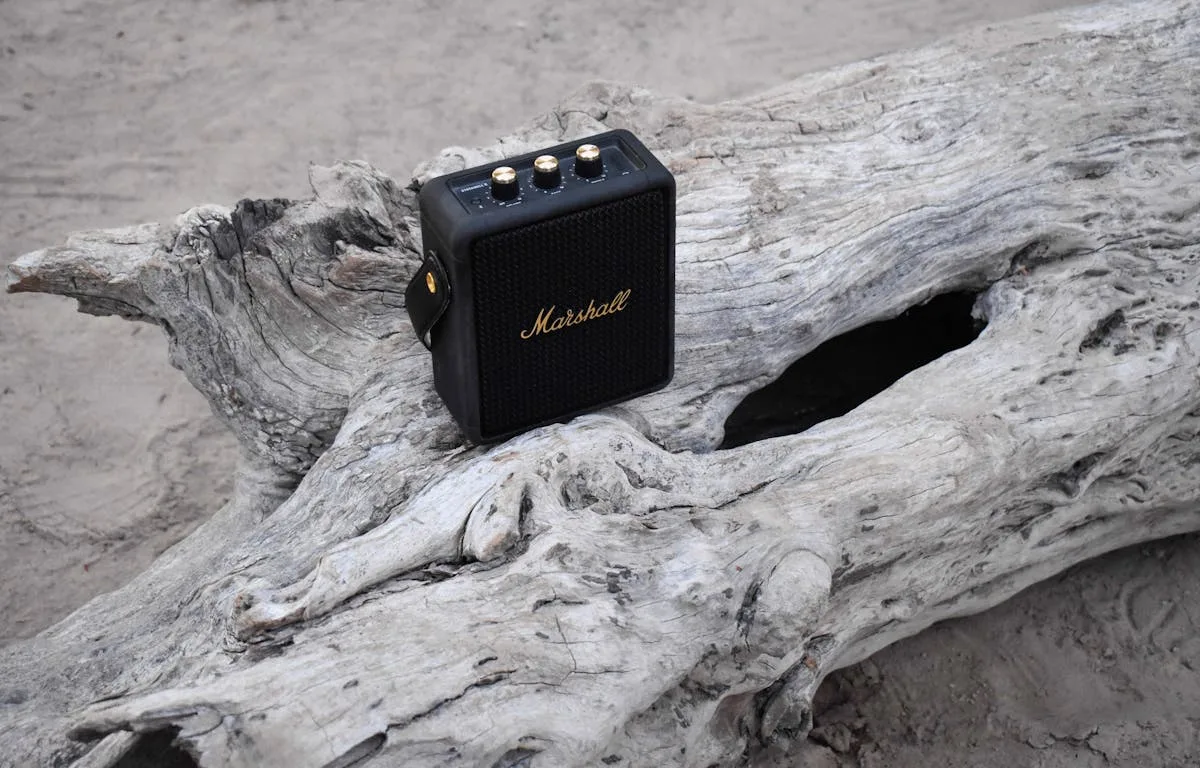
Home speakers reviewed
5. Sonos Era 100, black: best home speaker
The Era 100 is for a room where a socket and a reliable network are available. Bluetooth lets a guest connect directly, while Wi-Fi supports Sonos multi-room playback. Its paired angled tweeters are a design feature, not evidence that one unit will beat every rival speaker. Sonos’s Era 100 guide documents the connections, including optional line-in through a separate USB-C adapter.
It cannot follow you into the garden without mains power, and it has no weather-protection claim. A single Era 100 is a reasonable entry to a fixed home system; consider room placement and whether you may want a stereo pair later. Our small-room speaker guide is useful if space is tight.
6. Sonos Era 300, black: best for spatial music at home
The Era 300 is the specialist home choice: a larger enclosure designed for spatial playback from supported Dolby Atmos music sources. Sonos also offers ordinary stereo content, but paying extra only makes sense if you use a compatible service and have room for its wider form. It is mains powered, not an outdoor alternative to the Charge or Roam.
Spatial presentation depends on the source, service and room; a product badge cannot guarantee that every track will benefit. If you mainly play ordinary stereo in a small room, start with the Era 100. For a broader system comparison, see our Sonos versus Bose guide.
How to choose
Start with where it will live
- Mostly outdoors: buy a battery-powered speaker with an appropriate IP rating. Charge 6 is the balanced choice; Flip 7 is easier to carry; Go 4 is smallest.
- Mostly on one shelf: do not pay for a battery you will seldom use. Era 100 brings Wi-Fi and Bluetooth to a fixed room.
- Both places with Sonos at home: Roam 2 is the bridge, but its ten-hour quoted battery is below the Charge 6’s standard figure.
- Spatial music: Era 300 is a specific choice for supported sources, not an automatic upgrade for everyone.
The biggest shopping mistake is comparing claimed battery hours without comparing how each speaker will be used. Higher volume, low temperatures and phone charging can reduce practical endurance. An IP rating helps with accidents and rain, but follow the maker’s cleaning and charging instructions after exposure to water. For a garden-first shortlist, see our outdoor-speaker guide.
Fit the speaker to the room
A bigger speaker is not automatically a better buy in a compact room. Leave space around a home unit, think about where a power socket sits, and consider whether one speaker or a future stereo pair fits the layout. Our room-size guide and placement guide cover the practical setup. Avoid promising yourself that a tiny travel speaker will provide the same reach as a larger model at a gathering.
Bluetooth, Wi-Fi and multi-room
Bluetooth pairs directly with a phone and is the natural choice away from a home network. Wi-Fi can support home multi-room playback and service integration, but needs a compatible network and app. The Roam 2 and the two Era models offer both; the JBL models here are selected as portable Bluetooth speakers. Sonos Era speakers still need mains power even when you connect over Bluetooth. Our multi-room primer explains why adding rooms is a different decision from carrying one speaker around.
Do not use amplifier wattage as a shortcut for sound quality or coverage. Cabinet size, driver design, placement and listening distance matter too. Our speaker-specifications explainer covers those numbers without treating them as a listening test.
How we chose
We compared the six exact models by intended setting, maker-stated battery and water-resistance figures, connection options, size and practical limitations. We considered current UK availability and customer feedback for each exact variant. These recommendations use specifications and available evidence rather than hands-on testing; no listening panel or durability test is implied. Choose by where and how you will listen, then check the current offer and return terms before ordering.
The bottom line
Buy the Charge 6 if you want one versatile portable speaker and can carry its extra bulk. Take the Flip 7 for a lighter bag or the Go 4 for close-range travel. Roam 2 earns its place when portable listening and a Sonos home setup need to meet. For a speaker that will stay indoors, start with Era 100; pay more for Era 300 only if supported spatial music is a real priority. These are choices for distinct settings, not interchangeable upgrades.
Frequently asked questions
Which Bluetooth speaker is best for most people? The JBL Charge 6 is the most versatile portable choice here because it combines a long quoted battery life, IP68 protection and phone charging. For a fixed home shelf, the Sonos Era 100 is a more appropriate starting point.
Is the JBL Charge 6 waterproof? JBL lists an IP68 dust- and water-resistance rating. Follow its care and charging instructions after water exposure; the rating is not permission to leave it wet indefinitely.
How long does the JBL Flip 7 battery last? JBL quotes up to 14 hours in normal playback and an optional two further hours with Playtime Boost. Actual endurance depends on use and volume.
Does the Sonos Era 100 work over Bluetooth? Yes. It supports Bluetooth and Wi-Fi, but it is a mains-powered home speaker and has no battery.
Can I use Sonos Roam 2 outdoors? It has a battery and IP67 rating and can connect over Bluetooth away from home. Sonos quotes up to ten hours of battery life; keep charging equipment dry and follow the maker’s care instructions.
Is the Sonos Era 300 worth paying more for? It is worth considering if you have room for it and regularly play supported spatial music. For ordinary stereo in a smaller room, the Era 100 is the more sensible starting point.