Over-ear headphones are the safer choice for most people: they usually spread pressure around the ears, isolate more effectively and remain comfortable for longer listening sessions. The over-ear vs on-ear headphones decision changes when a smaller bag footprint, lower weight and less heat matter more than maximum isolation. The labels describe fit, though—not sound quality—and a well-designed on-ear pair can be better than a poor over-ear model.
In This Article
- The short answer
- Comparison table
- Comfort and fit
- Isolation, noise cancelling and leakage
- Sound quality
- Portability and everyday use
- Five-minute choice test
- Which type suits you?
- Final verdict
- Frequently asked questions
Over-Ear vs On-Ear Headphones: The Short Answer
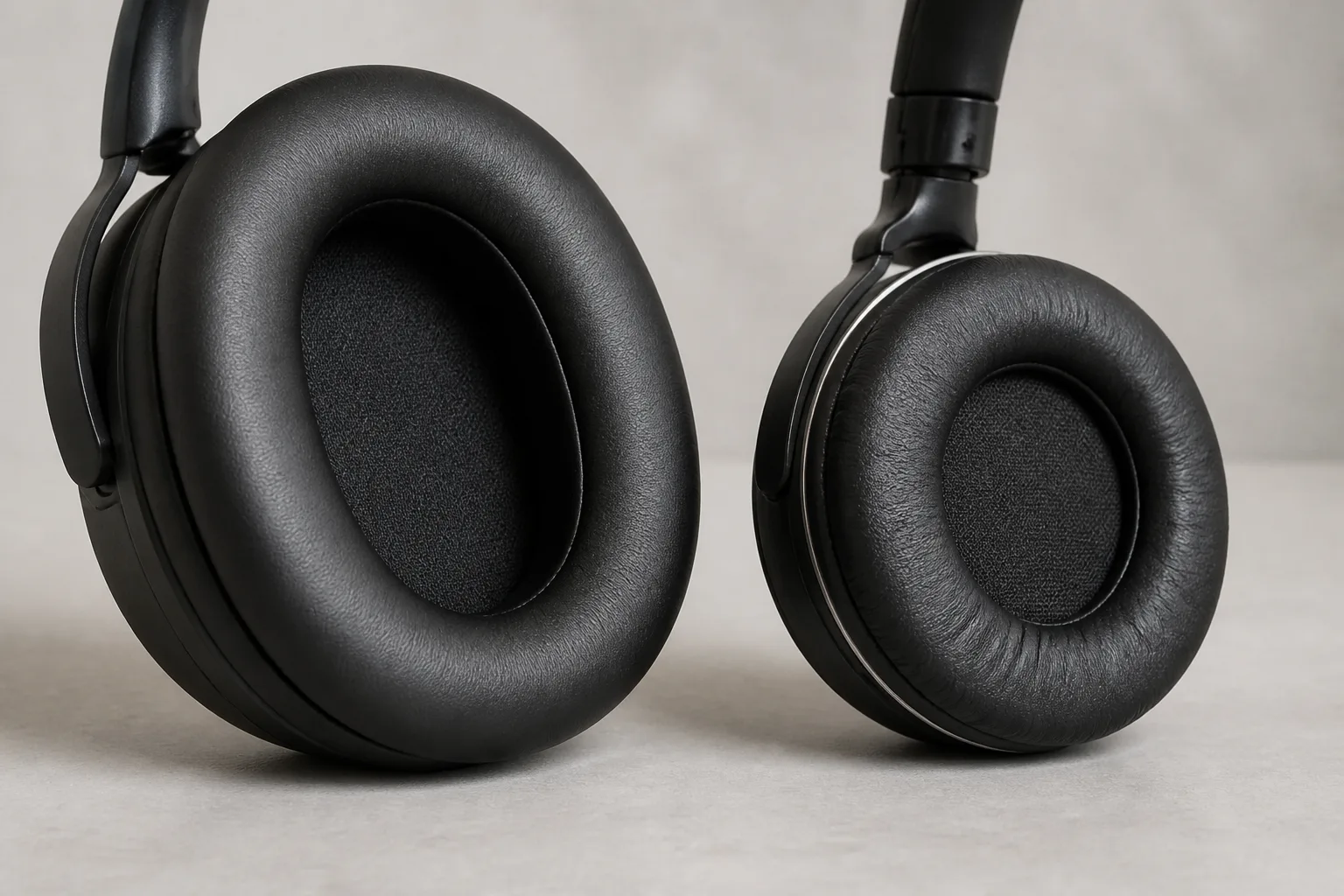
An over-ear, or circumaural, headphone has cushions that sit around the pinna—the visible outer ear. An on-ear, or supra-aural, headphone uses smaller pads that rest directly on it. That one physical difference changes how pressure is distributed, how much outside noise enters and how easily the headphones fit into a work bag.
Choose over-ear headphones if you listen for several hours at a desk, want strong passive isolation, use active noise cancelling on trains or flights, or dislike pressure directly on your ears. Their larger cups are bulkier and can become warm, but the better models distribute clamp across the headband and cushions rather than concentrating it on the ear.
Choose on-ear headphones if you commute light, remove your headphones frequently, want a compact folding design or find enclosed cups too hot. They can feel pleasantly unobtrusive for an hour, but firm clamp and direct pad pressure become tiring for some listeners during a full working day.
The useful distinction is physical fit, not status. Over-ear does not automatically mean premium, and on-ear does not mean weak sound. Our broader headphone buying guide covers connection, tuning and features after you have chosen the right shape.
Over-Ear and On-Ear Headphones Compared
| Decision | Over-ear | On-ear |
|---|---|---|
| Pad position | Surrounds the outer ear | Rests on the outer ear |
| Long-session comfort | Usually better if the opening is large enough | More dependent on clamp and pad softness |
| Passive isolation | Usually stronger with a good seal | Usually lets in more outside sound |
| Heat | Warmer because the cup encloses the ear | Often cooler, though the pad still covers skin |
| Portability | Bulkier, even when folding | Normally smaller and easier to pack |
| Glasses | Pad presses the arm against the side of the head | Pad may press directly on ear and glasses arm |
| Best fit | Home, office, flights and focused listening | Light commuting, short sessions and small bags |
JBL’s explanation of the two formats uses the same basic distinction: on-ear pads sit on the ears, while over-ear cups enclose them. Treat the manufacturer’s wider performance claims as brand guidance, but the physical terminology is useful when retailer listings use inconsistent wording.
Do not confuse over-ear with closed-back. An over-ear headphone can be open-back or closed-back, and those designs behave very differently. Our open-back versus closed-back comparison explains that separate choice.
Comfort and Fit
Comfort is the strongest reason to choose one format over the other, and it cannot be settled from a specification sheet. Head weight, clamp force, cushion depth, pad material, headband shape and your own ears all matter. A light headphone can still hurt if it concentrates pressure in the wrong place.
Why over-ear often wins for long sessions
A correctly sized over-ear opening leaves the ear inside the cushion rather than underneath it. Pressure lands around the ear, and the headband carries some of the weight. That is why a 280g over-ear model can feel easier after three hours than a 180g on-ear pair with a firm clamp.
The catch is cup size. If the opening is too shallow, the driver covering touches the ear. If it is too short, the cushion pinches the top or lobe. At that point you have the bulk of over-ear headphones without the comfort benefit.
Why on-ear comfort varies so much
On-ear cushions must grip firmly enough to stay stable, yet gently enough not to squash the ear. Soft foam helps, but a plush pad cannot rescue excessive clamp. People who are comfortable for the first 15 minutes sometimes notice a hot spot after an hour, especially at the upper ear or where glasses arms cross the pad.
On-ear is not inherently uncomfortable. A light, well-padded pair with moderate clamp can almost disappear during short journeys. The problem is that the format offers less room for error. Small differences in ear shape and head width change the experience more noticeably.
Glasses, earrings and head size
Try headphones with the glasses you actually wear. Thick arms can break an over-ear seal and create a pressure line; on-ear pads can press the arm into the ear itself. Neither format always wins, although deep, soft over-ear pads tend to be more forgiving.
Remove large earrings during the fit test so they do not disguise the real pressure points. Extend the headband evenly on both sides, place the cups first and then make small adjustments. If the headband is already at maximum extension or the pads cannot sit flat, choose another model rather than hoping it will loosen dramatically.
Isolation, Noise Cancelling and Leakage
Three ideas are often bundled together but should be checked separately:
- Passive isolation is the physical reduction created by pads and their seal.
- Active noise cancellation (ANC) uses microphones and signal processing to reduce external sound.
- Leakage is how much of your audio escapes and becomes audible to someone nearby.
Passive isolation
Closed-back over-ear headphones usually have the advantage because the cushions form a larger boundary around the ear. That can reduce office chatter and carriage noise before ANC starts working. Hair, glasses and an incomplete seal reduce the effect, so cup size and pad flexibility matter.
On-ear pads create a smaller contact area and move more easily as you turn your head. Some isolate surprisingly well, but the result tends to be more fit-sensitive. More awareness can be useful while walking, yet neither design should be relied on as a safety feature near traffic.
ANC is model-specific
Over-ear construction gives manufacturers room for microphones, batteries and processing, so many flagship ANC models use it. That does not make every over-ear pair better at cancellation than every on-ear pair. Compare independent measurements and the exact model’s behaviour, including wind noise and transparency mode, rather than buying by silhouette.
Good isolation or ANC can help you resist increasing volume in noisy places. The World Health Organization’s safe-listening guidance recommends well-fitted, noise-cancelling headphones, keeping device volume below 60% of maximum and monitoring listening duration. Fit is useful because it supports lower-volume listening, not because one headphone shape makes loud playback safe.
Leakage in quiet rooms
Leakage depends on enclosure, pad seal and playback level. Closed over-ear models normally keep audio private more effectively, which helps in libraries and shared offices. Open-back over-ear headphones deliberately leak, however, so “over-ear” alone tells you little. If nearby people can identify the podcast at your normal volume, turn it down before blaming the format.
Sound Quality: Does Bigger Mean Better?
Over-ear headphones have space for larger drivers and acoustic chambers, but driver diameter does not determine fidelity. Tuning, diaphragm control, enclosure design, pad seal and digital processing matter more than a single number on a box.
Bass and seal
Bass often weakens when the pad seal breaks. Over-ear designs have more surface area with which to form a seal, so they can deliver consistent low frequencies when properly fitted. Glasses or poorly sized cups can still create a gap. On-ear bass varies more with position: shifting a cup a centimetre may change what you hear.
Do not assume heavier bass is more accurate. Some inexpensive models boost low frequencies to sound impressive during a shop demonstration. If voices become thick or kick drums swamp the rest of the mix, that is tuning—not an inevitable feature of either format.
Space and imaging
The larger physical presentation of over-ear headphones can feel spacious, particularly with open-back models, but enclosure design again matters. A good on-ear pair can image precisely; a mediocre over-ear pair can sound congested. Our guide to whether expensive headphones are worth it explains why build, tuning and replaceable parts matter more than size or price alone.
Wired and wireless are separate choices
Both formats are sold with cables, Bluetooth or both. Bluetooth codec support, microphone quality and latency are electronics questions, not ear-cup questions. Compare our wired versus wireless headphones guide if connection is the next decision.
Portability, Heat and Everyday Use
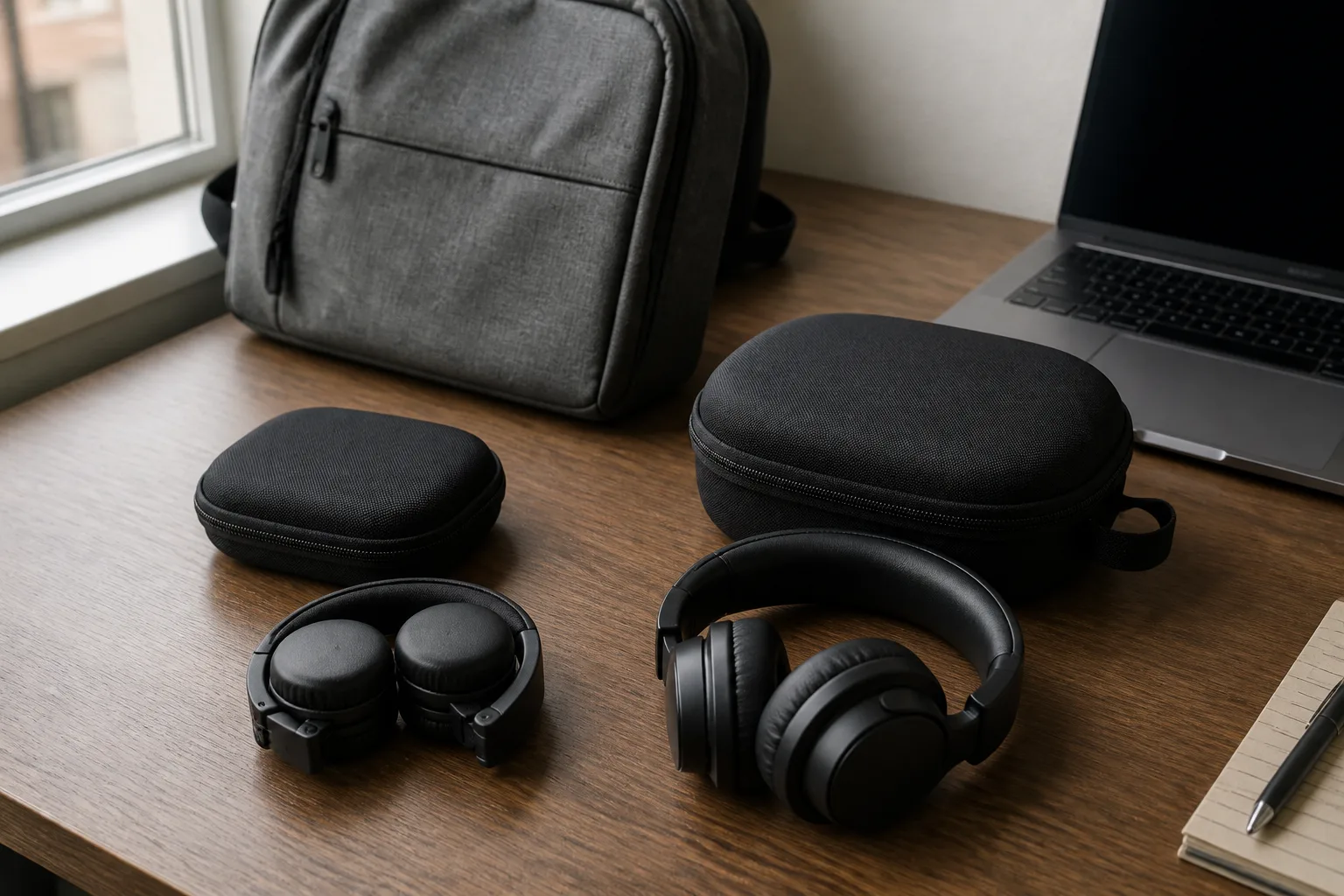
On-ear headphones make the stronger travel case when every centimetre counts. Folding hinges and smaller pads allow a compact hard case, and lighter weight is welcome in a laptop bag. Over-ear models may rotate flat, but their cup diameter still occupies a substantial rectangle.
Commuting and flights
For a short bus or train journey, on-ear portability can outweigh weaker isolation. For a long train ride or flight, over-ear comfort and ANC normally matter more than bag space. A rigid case is worth using for either format: folding hinges are convenient but also introduce moving joints that dislike being crushed under a laptop charger.
Heat and warm rooms
Over-ear pads surround the ear and reduce airflow, particularly when made from synthetic leather. That warmth is noticeable in summer, on the Underground and during long video calls. Velour or fabric pads often breathe better but may isolate less.
On-ear headphones expose more of the area around the ear, yet the pad still sits directly on skin. They can feel cooler overall, although foam becomes damp during exercise. Most ordinary headphones lack a meaningful sweat-resistance rating; use a sport-specific model for hard training rather than assuming a smaller pad is protected.
Office calls and home working
Over-ear headphones are the more dependable all-day office choice when they fit properly. They reduce distraction and avoid repeated pressure on the pinna. On-ear models work well for people who take frequent calls, remove the headset between meetings and want to hear colleagues without switching modes.
Microphone quality is not predicted by either format. Check how the exact model handles room noise and whether it supports a wired microphone when the battery is flat. Clean pads regularly; our headphone maintenance guide covers safe routines for common cushion materials.
How to Choose in Five Minutes
A shop demonstration or home returns window is more useful when you test methodically. Use your normal glasses, usual phone and familiar spoken audio as well as music.
- Check the pad position. With over-ear headphones, confirm no part of the cushion sits on the ear. With on-ear headphones, centre the pads and notice whether pressure is even.
- Wait for pressure. Wear them for at least five minutes without constant adjustment. Any sharp hot spot is likely to become worse, not better.
- Move naturally. Look down, turn your head and walk a few steps. The headphones should stay stable without clamp becoming painful.
- Test the seal. Play a familiar bass line quietly, then press the cups gently. A dramatic tonal change suggests the normal fit is leaking.
- Check real controls. Adjust volume, pause playback and take a call. Controls that are awkward in a quiet shop will be worse on a wet platform.
Do not judge comfort while holding the cups against your head; your hands alter both pressure and seal. If buying online, retain every insert until the fit decision is made and read the retailer’s hygiene and return conditions before wearing them for an extended period.
Which Type Suits You?
Choose over-ear for home and focused work
Over-ear is the default recommendation for long listening, home working, gaming and music sessions. The design gives manufacturers more freedom to distribute pressure and usually creates stronger isolation. Look for deep pads, replaceable cushions and a headband that adjusts without reaching its limit.
Choose over-ear for long-distance travel
On flights and long rail journeys, isolation and sustained comfort beat the space saved by a smaller pair. A good ANC over-ear model can reduce the urge to overpower engine or carriage noise. Pack it in a case and accept the bulk.
Choose on-ear for a light daily commute
On-ear makes sense for a 20-minute journey, a small shoulder bag or frequent removal. Folding models are quick to stow and less enclosing in warm weather. Prioritise moderate clamp and soft, replaceable pads; compactness is a poor bargain if your ears ache halfway to work.
Choose on-ear for intermittent office use
If headphones are worn for one call, removed, then used again later, on-ear can feel less cumbersome. They also let more room sound through naturally. In a noisy open-plan office, though, over-ear isolation is normally the better tool.
Do not choose by format alone for sound
For sound quality, compare the exact models. Neither label settles tonal balance, detail, microphone performance, codec support or durability. If possible, audition at matched volume; louder nearly always sounds more impressive during a quick comparison.
Final Verdict
For most buyers, choose over-ear headphones. They are bulkier and warmer, but a correctly sized pair is usually easier to wear for hours, isolates more reliably and works better for focused listening and long travel.
Choose on-ear instead when portability is the genuine priority and your sessions are relatively short. The format is useful, not second-rate—it simply trades some isolation and pressure distribution for a lighter, smaller design.
The biggest mistake is buying from the category label without checking fit. An over-ear cup that pinches your ear is not truly functioning as over-ear, while an on-ear model with excessive clamp will not become comfortable because it weighs less. Try the exact pair, keep volume moderate and let your ears make the final call.
Frequently Asked Questions
Are over-ear headphones better than on-ear headphones?
Over-ear headphones are usually better for long sessions, isolation and travel, while on-ear headphones are normally smaller and lighter. The better choice depends on fit and use rather than the label alone.
Are on-ear headphones uncomfortable?
Not necessarily. A light pair with soft pads and moderate clamp can be comfortable, especially for short sessions. Direct pressure on the ears makes fit more personal, so try the exact model for longer than a few minutes.
Do over-ear headphones sound better?
Not automatically. They provide more physical room for drivers and acoustic design, but tuning, seal, construction and processing decide performance. A good on-ear model can sound better than a poor over-ear one.
Which type is better for glasses?
Soft, deep over-ear pads are often more forgiving, but glasses arms can break their seal. On-ear pads may press the arm directly against the ear. Test headphones while wearing your normal frames.
Which type is better for commuting?
On-ear is convenient for short commutes and small bags. Over-ear is generally better for long or noisy journeys because comfort, passive isolation and ANC matter more over time.
Are over-ear headphones safer for hearing?
Neither format is inherently safe at excessive volume. A well-fitted, isolating or noise-cancelling pair may help you listen more quietly, but sound level and exposure duration remain the important factors.