Hi-fi has always chased the same thing: making recorded music feel less like a copy and more like a performance in the room. The gear has changed from clockwork gramophones to wireless spatial audio systems, but the argument underneath has barely moved. This history of hi-fi audio is really a history of three questions: how close can we get to the original sound, how much space will the kit take up, and how much are we willing to pay for the difference?
In This Article
- History of Hi-Fi Audio: What Actually Changed
- From Gramophones to Record Players
- Radio, Valves and the First Living-Room Hi-Fi
- Stereo, Vinyl and the Golden Age
- Cassettes, CDs and the Digital Shift
- Streaming, Hi-Res and Spatial Audio
- What Still Matters When Buying Hi-Fi Today
- Frequently Asked Questions
History of Hi-Fi Audio: What Actually Changed
The phrase hi-fi means high fidelity, but fidelity has never meant only clean measurements. It means a system that keeps enough of the original recording intact that the listener stops thinking about the machine. In practice, every generation has had its own weak link.
The weak link keeps moving
With early gramophones, the weak link was mechanical playback. With valve radios, it was noise, limited bandwidth and speaker size. With vinyl, it became cartridge setup, record condition and room acoustics. With CDs, people argued less about surface noise and more about mastering quality. With streaming, the weak link can be the speaker, the app, the room correction, the Wi-Fi or the monthly subscription.
That is why old hi-fi debates refuse to die. A £300 turntable can sound lovely, but only if the cartridge, phono stage and speakers suit it. A £10.99-per-month streaming account can sound excellent, but not through a tiny smart speaker wedged on a kitchen shelf.
Hi-fi was never just about expensive kit
Proper hi-fi has always had a practical side. Better sound came from better speed stability, quieter amplification, wider speaker range, improved stereo placement and cleaner source material. Those gains can be heard on modest gear, not only on systems costing thousands.
Our guide to speaker specifications is useful here because the old hi-fi story is full of numbers people misunderstood. Watts, sensitivity and impedance matter, but they do not tell the whole story on their own.
The living room shaped the technology
Most hi-fi history is domestic history. Gear had to fit on sideboards, survive children, work in terraced houses, and earn its place against the television. Big speakers and separates sounded better, but they also took over the room. That tension is still with us. It is why a £180 pair of powered bookshelf speakers can be a better buy for a flat than a £900 AV receiver and tower-speaker package with nowhere sensible to live.
From Gramophones to Record Players
Before hi-fi became an electrical pursuit, recorded sound was mechanical. The gramophone used a needle, groove and horn to turn physical movement into audible sound. It was limited, scratchy and loud in the wrong ways, but it changed the relationship people had with music.
Music became repeatable at home
The big shift was not perfect sound. It was repeatability. A performance could be owned, replayed and shared without a musician in the room. That sounds ordinary now, but it was a huge cultural change.
The Science Museum’s story of a portable Decca gramophone used during the First World War is a good reminder that early playback machines were not just parlour curiosities. They were personal, social objects. People carried music with them long before Bluetooth speakers made that normal.
Early records were fragile and limited
Shellac 78rpm records were heavy, brittle and short. A side might hold only a few minutes of music. Bass was thin, volume was uneven, and the playback needle wore both itself and the record. Nobody was comparing soundstage depth on a forum. They were trying to hear a favourite song again.
If you buy vintage 78s today, prices vary wildly. Common discs can be £2-£10 in charity shops or record fairs, while collectable jazz, blues or early classical pressings can be far more. The equipment is the bigger problem. A modern turntable built for vinyl LPs should not be used with 78s unless it supports the speed and cartridge properly.
Electric record players changed expectations
Once amplification entered the picture, the record player could become smaller, louder and easier to use. The horn disappeared, speakers improved, and the idea of a music system started to make sense.
You can still buy suitcase-style record players for about £40-£90 from Amazon UK, Argos or HMV, but they are not hi-fi. They are convenient novelty players. A better beginner turntable, such as an Audio-Technica AT-LP60X at about £130-£170 or a Pro-Ject Primary E at about £180-£230, is a much safer starting point. Our best turntables for beginners guide explains that gap in more detail.
Radio, Valves and the First Living-Room Hi-Fi
Radio made music and speech part of daily life. It also trained people to expect sound from furniture-sized boxes in the corner of the room. That mattered because hi-fi needed a place in the home before it could become a hobby.
Valves gave early systems their character
Valve amplification is still surrounded by romance. Some of it is deserved. A well-designed valve amp can sound smooth, rich and easy to listen to. Some of it is nostalgia wrapped in warm glass. Valves age, run hot and need careful matching with speakers.
Modern valve amplifiers are not cheap toys. A small Chinese-made valve headphone amp might cost £90-£180 from Amazon UK, while a proper integrated valve amplifier from brands such as Icon Audio can run from about £1,500 to well over £3,000. That price only makes sense if you want the character and the ownership experience, not just background music.
Cabinets mattered as much as circuits
Early home audio often lived inside wooden cabinets. That made the equipment feel like furniture rather than lab gear. It also hid the compromises. Speaker placement was fixed, cabinet resonance coloured the sound, and upgrades were limited.
The same trade-off exists in modern all-in-one systems. A Ruark R3S, usually around £649 in the UK, looks neat and sounds good for its size. It will not image like separate speakers on stands. That does not make it bad. It means the furniture problem never went away.
The hobby side started to grow
As components became separate, people could mix turntables, amplifiers and speakers. That was the birth of hi-fi as a hobby: not only listening, but choosing, matching and upgrading.
This is where the language became more serious. People talked about frequency response, distortion, output power and cartridge tracking. Some of it helped. Some of it became pub-argument fuel. The useful lesson is simple: the system works as a chain, and the weakest link sets the ceiling.
Stereo, Vinyl and the Golden Age
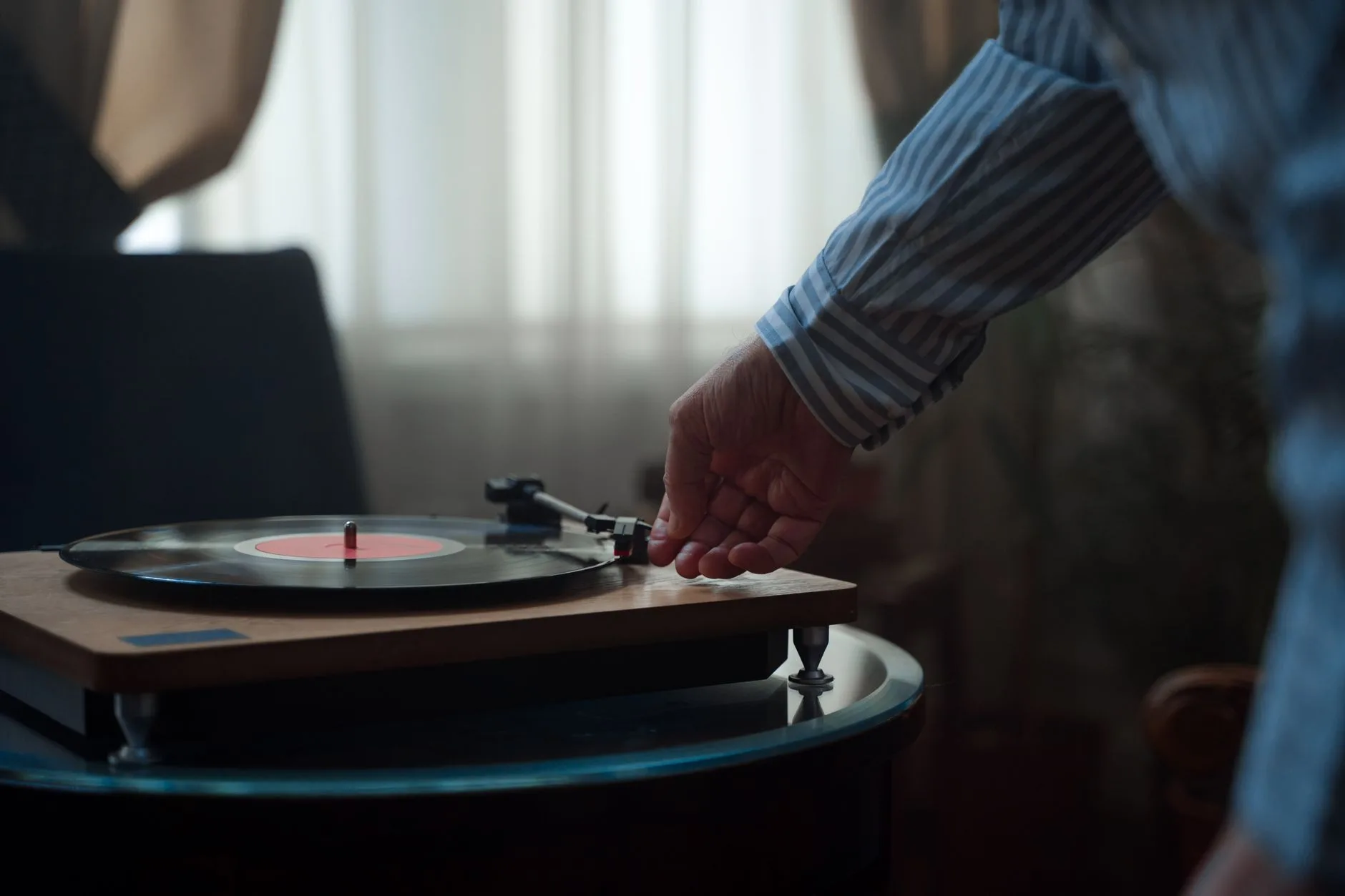
For many people, the golden age of hi-fi means the stereo vinyl era: separate turntable, integrated amplifier, two speakers, shelves of records and a favourite chair placed between them. It is not hard to see the appeal.
Stereo made placement matter
Mono playback can fill a room, but stereo creates a picture. Vocals sit in the middle, instruments spread left and right, and the room starts to matter. Move one speaker too close to a wall and the bass changes. Put speakers at different heights and the image collapses.
That is why our article on how to choose speakers for your room size matters more than many upgrade lists. A £300 pair of speakers placed well can beat a £900 pair shoved into alcoves.
Vinyl made ownership tactile
Vinyl was never only about sound. It was sleeves, liner notes, cleaning rituals, side breaks and the small ceremony of lowering a stylus. That ceremony is why vinyl came back even after digital looked like it had won.
Prices now reflect that renewed interest. New LPs in the UK are often £22-£35. Second-hand common albums might be £5-£15, while clean collectable pressings can cost much more. Inner sleeves are about £12-£20 for a pack, and a basic carbon-fibre record brush is £8-£15. Our guide to storing vinyl records is worth reading if you are building a collection.
Separates gave people control
The classic hi-fi separates system gave listeners control over each part:
- Turntable: speed stability, tonearm quality and cartridge choice.
- Amplifier: power, input options and phono-stage quality.
- Speakers: tonal balance, sensitivity and room fit.
- Cables and stands: useful when chosen sensibly, silly when treated as magic.
A sensible modern version does not need to be outrageous. A Rega Planar 1 at about £299, a Cambridge Audio AXA35 at about £349, and a pair of Wharfedale Diamond 12.1 speakers at about £249-£299 can make a proper vinyl-based system for roughly £900-£1,000 before stands. That is not cheap, but it is far below the fantasy systems that make hi-fi look unapproachable.
Cassettes, CDs and the Digital Shift
The next big change was convenience. Cassettes made music portable and recordable. CDs made playback cleaner, more durable and easier to skip through. Both changed what people expected from sound.
Cassettes made music personal
Cassettes were not the highest-fidelity format, but they were personal in a way vinyl was not. You could record from radio, make mixes, carry music in a pocket and play it in the car. The Walkman era moved listening away from the shared living-room system and towards headphones.
Buying cassette gear now is a niche choice. Used decks can be £40-£150 for basic models, with serviced three-head decks costing far more. Blank tapes are no longer the cheap everyday item they once were. If you want the feel, fine. If you want reliable sound for the money, spend on a DAC, headphones or speakers instead.
CDs removed surface noise
CDs promised clean playback, no crackle and easy track access. For many listeners, that was a real upgrade. The format also changed mastering, album length and how people handled collections.
Used CD players remain one of the better hi-fi bargains. A decent second-hand Marantz, Denon or Cambridge Audio player can be £40-£150. New CD transports are more specialist, often £299-£499. Used CDs are still cheap, often £1-£5, which makes them appealing if you want ownership without vinyl prices.
Digital did not end hi-fi arguments
Digital audio shifted the argument from physical wear to file quality, conversion and mastering. MP3 made storage and sharing easy, but lower bitrates could sound flat or brittle. Lossless formats kept more data, but needed more storage and better playback chains to show the difference.
Our audio file formats guide covers the practical side. The short version: a well-mastered 320kbps stream through good speakers can be more enjoyable than a poor hi-res file through bad ones.
Streaming, Hi-Res and Spatial Audio
Streaming changed the centre of gravity again. The music library moved from shelves and hard drives to apps. That made discovery easier, but it also made the system feel less like ownership and more like access.
Streaming made source quality invisible
With vinyl or CD, you know what source you are playing. With streaming, the app, subscription tier, device, Bluetooth codec and speaker all matter. Spotify Premium is about £11.99 per month in the UK. Apple Music is about £10.99 per month. Tidal plans often sit around £10.99 per month. Prices change, so check before choosing on cost alone.
The strange part is that a streaming setup can be both cheap and very good. A WiiM Pro streamer at about £149 into powered speakers can outperform many bulky old systems in usability. Pair it with Q Acoustics M20 powered speakers at around £399, and you have a compact system that would have seemed science fiction in the cassette era.
Hi-res audio is useful but not magic
Hi-res audio can be worthwhile, especially with careful recordings and a revealing system. It is not a cure for bad speakers, bad rooms or harsh mastering. A £99 DAC from Topping, iFi or FiiO can be a smart upgrade if your laptop output is noisy. A £500 DAC is harder to justify unless the rest of the system is already strong.
Our hi-res audio explainer goes deeper, but I would not start a system by chasing sample rates. Start with speakers, placement and a clean source.
Spatial audio is the newest old idea
Spatial audio sounds new, but the desire is old: make recorded sound feel more three-dimensional. Dolby describes Dolby Atmos as sound that can move around the listener rather than staying fixed to channels. In practice, results depend heavily on the mix and playback gear.
A pair of AirPods Pro 2 at about £229 can give a convincing personal spatial effect with supported services. A Sonos Era 300 is usually around £449 and can make Atmos music feel bigger in one room. A full home-cinema Atmos setup can run from £800 to several thousand pounds once you include receiver, speakers and installation.
For music, I still prefer a good stereo pair most of the time. Spatial audio is fun when the mix suits it. It is not a reason to throw out a well-set-up stereo system.
What Still Matters When Buying Hi-Fi Today
The history is useful because it cuts through upgrade panic. Formats change. The fundamentals keep coming back.
Speakers and room placement beat format chasing
If you have £500 to improve sound, speakers and placement usually beat a boutique source upgrade. A pair of ELAC Debut, Wharfedale Diamond, Q Acoustics 3000-series or DALI Spektor speakers in the £200-£450 range can transform a room if placed well.
Speaker stands cost about £60-£150, and they are boring money well spent. Foam isolation pads for desktop speakers are £15-£35. A tape measure is cheaper than both. Our speaker positioning guide is the first upgrade I would make before buying another box.
Match the system to the way you listen
If you listen while cooking, a neat wireless speaker may be right. If you sit down with albums, separates make more sense. If you work at a desk, powered monitors and a small DAC can be better than a living-room amplifier.
Here are three sensible UK setups:
- Compact streaming setup: WiiM Mini at about £89 plus Edifier R1855DB powered speakers at about £180.
- Vinyl starter setup: Audio-Technica AT-LP60X at about £150 plus powered speakers around £180-£300.
- Classic separates setup: Cambridge Audio AXA35 at about £349, Wharfedale Diamond speakers around £249-£299, and a source of your choice.
None of these is historically pure. That is the point. Good hi-fi has always been about making the best compromise for the room, budget and listener.
Do not buy nostalgia by accident
Vintage gear can be wonderful, but it can also be expensive to repair. A £120 used amplifier is not a bargain if it needs £180 of service work. Old speakers may need re-foaming. Turntables may need belts, cartridges and setup.
Buy vintage because you enjoy the object and accept the maintenance. Buy modern if you want lower fuss, remote controls, Bluetooth, streaming and warranty cover. There is no moral victory either way.
Frequently Asked Questions
What does hi-fi mean? Hi-fi means high fidelity: audio playback that aims to reproduce the original recording accurately, with low distortion and enough detail to feel convincing.
Was vinyl the best era of hi-fi? Vinyl was the classic hi-fi era for many listeners, but not because it measured perfectly. It combined good sound, physical ownership and upgradeable separates.
Are CDs better than vinyl? CDs avoid surface noise and can sound excellent, but a well-set-up vinyl system has a tactile appeal many people prefer. The recording and mastering matter more than the format alone.
Is spatial audio replacing stereo? Not for most music listening. Spatial audio is impressive with the right mix and gear, but a well-placed stereo pair is still the safer choice for everyday hi-fi.
How much should a beginner spend on hi-fi? A useful starter system can cost £250-£500 for powered speakers and a streamer, or £800-£1,000 for entry-level separates with a turntable.
Is vintage hi-fi worth buying? It can be, if the gear is serviced and you accept repair risk. For low-fuss listening, modern speakers, streamers and amplifiers usually make more sense.