Building a budget hi-fi system is mainly about spending in the right order. Put the money into speakers first, buy an amplifier that suits them, then add the source you use most. This budget hi-fi system guide keeps the setup realistic for UK living rooms, box rooms and rented flats where £300 to £900 has to cover the whole lot.
In This Article
- Budget Hi-Fi System Guide: Start with the Budget and the Room
- Choose Speakers First
- Pick the Right Amplifier
- Add Sources Without Wasting Money
- Cables, Stands and Placement
- Example UK Budget Systems
- Frequently Asked Questions
Budget Hi-Fi System Guide: Start with the Budget and the Room
A good budget hi-fi system is not the cheapest pile of boxes you can connect together. It is a balanced system where the speakers suit the room, the amplifier is not struggling, and the source is good enough that you are not hearing Bluetooth mush through nice speakers.
Set the real total first
Do not spend £500 on speakers and then remember you need an amplifier, cable, stands and something to play music from. Decide the all-in number before you shop:
- £300 to £400: best for used separates, active speakers, or a small desktop system.
- £500 to £700: enough for sensible passive speakers, a used or entry-level amp, and a simple streamer.
- £800 to £1,000: where new speakers, a decent integrated amp and a better source become realistic.
- Under £250: possible, but I would usually buy used or choose active speakers rather than force a weak separates system.
Leave at least £40 to £100 for the boring bits: speaker cable, stands or isolation pads, a basic interconnect and maybe a longer optical cable. It is annoying to own nice speakers that live on a wobbly sideboard because the accessory budget vanished.
Match the system to the room
A small UK spare room does not need floorstanders. In fact, big speakers can sound worse if they are jammed into corners. For most first systems, compact standmount speakers are safer: Q Acoustics 3020i at about £199, Wharfedale Diamond 12.1 around £249, DALI Spektor 2 around £199, or used Monitor Audio Bronze speakers around £150 to £250.
If your room is under 12m², avoid chasing huge bass. If it is a 4m by 5m living room, you can go larger, but placement still matters more than bragging rights. Our guide to choosing speakers for your room size is worth reading before you buy anything heavy.
Decide what you will actually play
Be honest about sources. If you mostly use Spotify, Apple Music or internet radio, start with streaming. If you have 200 records, build around vinyl. If your CDs are in the loft and you only feel guilty about them twice a year, do not let a CD player eat the budget.
The system should match your habits, not the version of yourself who owns alphabetised jazz pressings and dusts the amp every Sunday.
Choose Speakers First
Speakers shape the character of a budget hi-fi system more than any other component. A better amplifier cannot fully rescue speakers you dislike. Cheap speakers placed well can embarrass dearer ones placed badly.
Passive or active?
Passive speakers need a separate amplifier. Active speakers have amplification built in. Neither is automatically better; they suit different buyers.
Choose passive speakers if you want:
- Upgrade flexibility: change amp, source or speakers later.
- More second-hand choice: used passive speakers are everywhere on eBay, Facebook Marketplace and Richer Sounds clearance.
- A traditional hi-fi path: separate amp, separate source, proper speaker cable.
Choose active speakers if you want:
- Fewer boxes: one powered speaker pair can replace amp plus speakers.
- Desktop use: active speakers work well near a laptop or monitor.
- Simple setup: fewer matching worries, fewer cables, less shelf space.
For a living-room system I still prefer passive speakers at this budget because the used market is strong. For a desk, active speakers such as Edifier R1280DBs at about £130, Ruark MR1 Mk3 at about £349, or Kanto YU4 at about £349 can make more sense.
New speaker picks that make sense
If buying new in the UK, these are sensible starting points:
- Q Acoustics 3020i: about £199 from Q Acoustics dealers; smooth, forgiving and easy to place.
- Wharfedale Diamond 12.1: about £249 from Richer Sounds or Peter Tyson; fuller and warmer than many cheap boxes.
- DALI Spektor 2: about £199; lively, open and good for smaller rooms.
- ELAC Debut B5.2: often £229 to £279; punchy, but they like a bit of amplifier grip.
Our best bookshelf speakers guide has deeper picks, but for a first budget hi-fi system I would take Q Acoustics 3020i or Wharfedale Diamond 12.1 before getting too clever.
Buying used speakers
Used speakers are where budget systems get interesting. A tidy pair that cost £500 five years ago may sell for £180 now. Look for:
- Undamaged tweeters: pushed-in tweeters are a pain and not always harmless.
- Matching pair: same finish, same model, same driver layout.
- No scraping: gently press the woofer cone and listen for rubbing, if the seller allows it.
- Original jumpers: if the speakers are bi-wireable, missing metal links are not fatal but need replacing.
- Local collection: speakers survive better when they are not thrown around by couriers.
I would rather buy used speakers from a careful local owner than a mystery “untested” pair from a house-clearance seller. Untested usually means tested enough to know there is a problem.
Pick the Right Amplifier
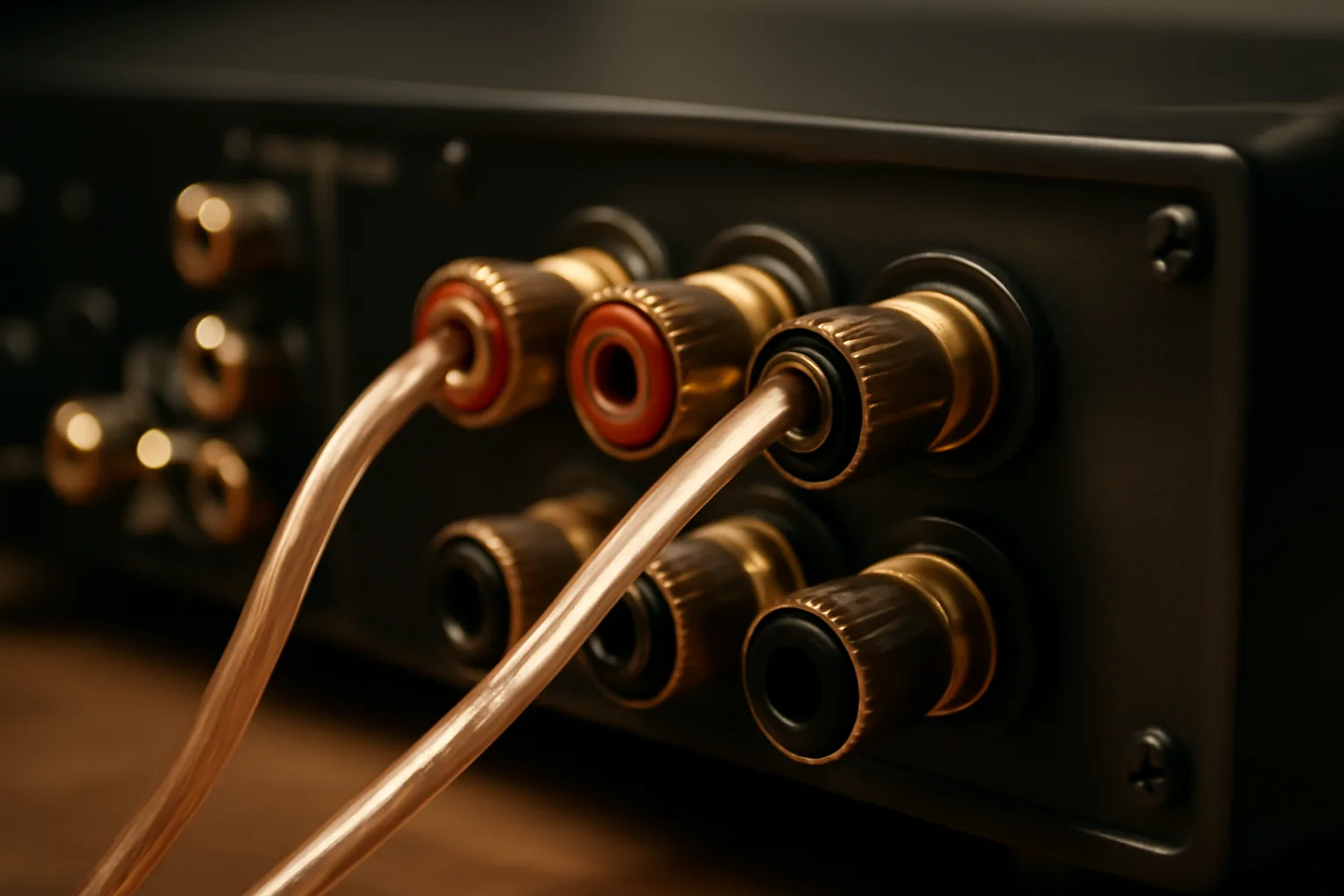
The amplifier has two jobs: provide enough clean power for the speakers and give you the inputs you need. Do not obsess over wattage alone. A modest amp with sensible speakers in a normal room can sound excellent.
What specs matter?
Check three things before buying:
- Speaker impedance: most budget speakers are 6 or 8 ohms, but some dip lower. Make sure the amp is comfortable with them.
- Inputs: count what you need now: optical, RCA, phono, USB, Bluetooth, streamer, TV, CD.
- Room volume: if you listen loudly in a large room, avoid tiny low-power amps unless speakers are easy to drive.
ELAC’s impedance guide explains the basic matching problem: lower-impedance speakers demand more from the amplifier, so match the speaker’s nominal impedance to the amplifier’s rating where possible: ELAC amplifier and speaker impedance guidance. That is the kind of mundane compatibility check that saves you from buying the wrong amp.
New budget amplifiers
New integrated amps worth considering:
- Cambridge Audio AXA35: about £349; clean, simple, phono input included, no digital inputs.
- Denon PMA-600NE: about £399; useful digital inputs, Bluetooth and a built-in phono stage.
- Marantz PM6007: about £449; polished sound, digital inputs and phono, often discounted.
- Yamaha A-S301: about £399; sturdy, flexible and a good used buy around £220 to £280.
If I were buying new for a £700 system, I would pair Wharfedale Diamond 12.1 speakers with a Denon PMA-600NE or Yamaha A-S301. That gives enough input flexibility without blowing half the budget on amplifier jewellery.
Used amp sweet spots
Used amplifiers can be excellent value, but avoid anything crackly, overheating or missing a remote if you need one. Good used targets:
- Cambridge Audio Topaz/AX series: usually £120 to £220 depending on model and condition.
- Yamaha A-S301 or A-S501: about £220 to £350 used; reliable and practical.
- Marantz PM6005/PM6006: around £180 to £300 used; often a safe musical choice.
- Denon PMA series: about £150 to £300 used; check input condition and remote.
Ask the seller to show both channels working, the volume knob moving cleanly, and every input you care about. A £180 bargain amp with one dead channel is not a bargain; it is furniture.
Add Sources Without Wasting Money
The source is where budget systems often get silly. People buy a DAC, streamer, CD player and turntable before they know what they will use daily. Start with one main source, then add others later.
Streaming is the easiest win
For most people, a streamer is the best first source. A WiiM Mini is about £89 and works well if your amp has a decent analogue input or you use its optical output into a DAC. A WiiM Pro is around £149, and the WiiM Pro Plus is about £175 at Richer Sounds or up to £219 at other UK retailers. The Pro Plus makes sense if you want its better built-in DAC.
WiiM’s own product information says the Pro line supports up to 192kHz/24-bit playback: WiiM Pro product information. You do not need hi-res numbers to enjoy music, but it is useful to know the streamer is not the weak link.
If you are still learning the difference between streamers, DACs and digital inputs, read our guide to choosing a DAC before buying a separate box.
CD players are cheap used
If you own CDs, buy used. A tidy Marantz, Denon, Yamaha or Cambridge Audio CD player can be £40 to £150. New CD players often start around £249, which is hard to justify in a tight first system unless CDs are your main library.
Check the tray opens smoothly, discs read quickly, and the analogue outputs work. A missing remote is not fatal, but it should reduce the price.
Vinyl costs more than people expect
Vinyl is lovely, but it is not the cheapest way into hi-fi. A basic Audio-Technica AT-LP60X is about £149 and easy to use, but it is not where I would put money if sound quality per pound is the goal. A Pro-Ject Primary E is about £199, while a Rega Planar 1 is about £299. Add a phono stage if your amp does not have one: a Pro-Ject Phono Box E is about £69, and a Rega Fono Mini A2D is about £119.
Our beginner turntables guide and phono preamp explainer will save you buying a turntable and then wondering why it is barely audible.
Bluetooth is fine, but know the limit
Bluetooth is handy for guests and quick listening. I would not build the main system around cheap Bluetooth if you can avoid it. A £89 WiiM Mini feeding an amp usually beats a no-name £20 Bluetooth receiver. If Bluetooth is built into an amp such as the Denon PMA-600NE at around £399, treat it as a convenience, not the main reason to buy.
Cables, Stands and Placement
This is the least glamorous section and probably the one that saves the most money. A budget hi-fi system can sound flat if speakers are too close to the wall, placed at different heights, or wired with one channel out of phase.
Do not overspend on cables
For normal rooms, 2.5mm² copper speaker cable is fine. Expect to pay about £15 to £30 for enough cable for a typical living room. Banana plugs are optional; a set of eight costs about £10 to £20 and mainly makes plugging in easier.
For RCA interconnects, a £10 to £20 cable from KabelDirekt, Fisual, QED’s entry range or Amazon Basics is fine. Do not buy £120 interconnects for a £500 system. That money belongs in speakers, stands or records.
Our audio cables guide covers analogue, optical and digital cables without the nonsense.
Stands can beat bigger speakers
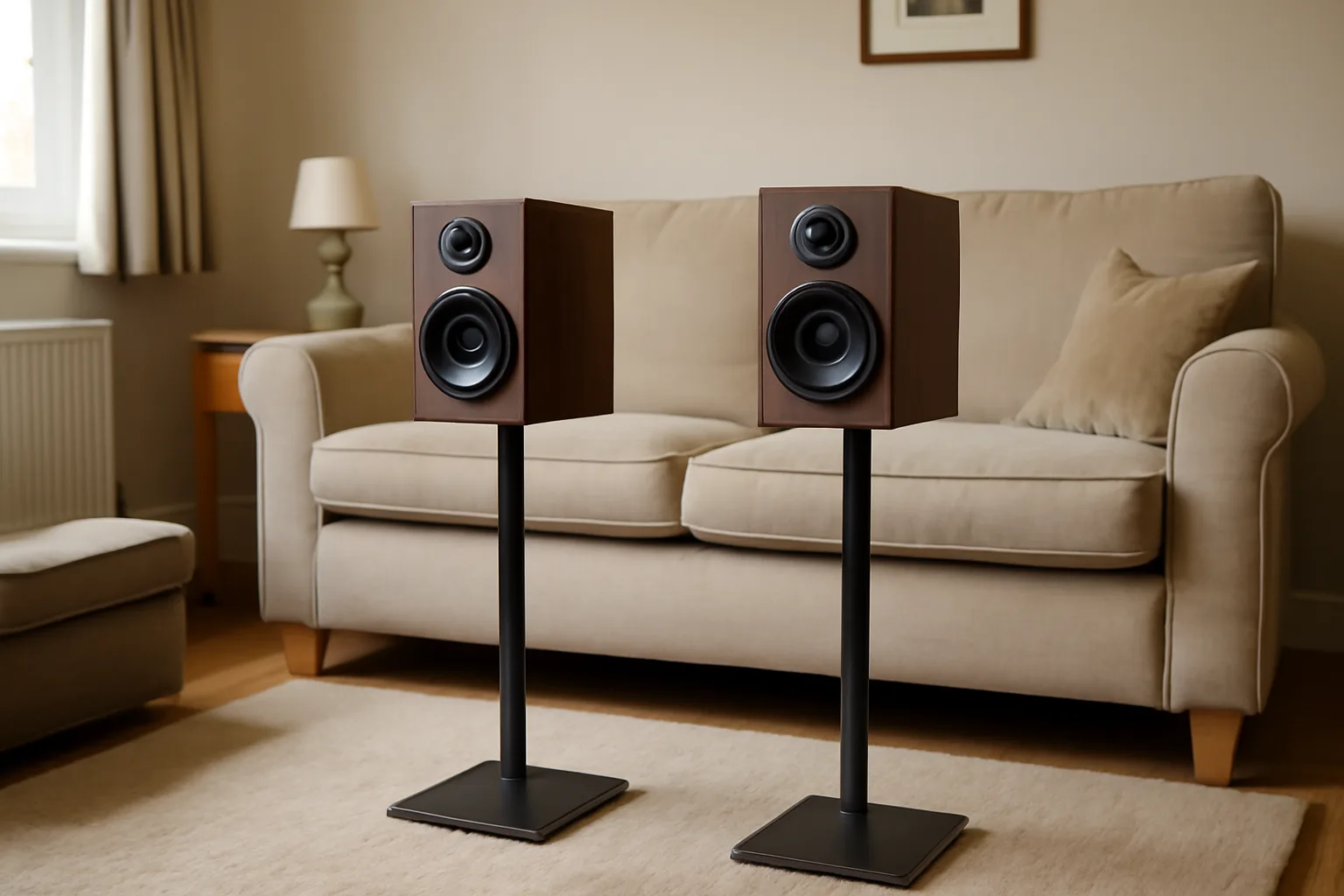
Standmount speakers need support. Proper stands put the tweeters roughly at ear height and stop the cabinet rocking. Budget stands from Atacama, Fisual or NorStone are usually £70 to £150. Used stands can be £30 to £80 if you collect locally.
If stands are impossible, use isolation pads on a solid sideboard. A pair of foam pads is about £15 to £30. They will not turn a shelf into a perfect stand, but they can clean up muddy bass.
Placement before upgrades
Set the speakers in a rough triangle with your listening position. Start with them 20 to 50cm from the back wall, slightly toed in, and at equal distance from your seat. Speaker positioning is one of the first tweaks to make because it costs nothing and can change the balance more than a cheap cable swap.
Then listen before spending more. Move speakers in small steps. If bass booms, pull them from the wall. If the centre image is vague, toe them in a little. If one side dominates, check distance and room furniture before blaming the amp.
For a deeper placement process, use our guide to positioning speakers for the best sound.
Example UK Budget Systems
These are not the only ways to build a system. They are sane starting points that avoid the usual mistake: buying one impressive component and starving everything around it.
Around £350: used-first separates
This is where Facebook Marketplace, eBay collection and Richer Sounds clearance matter:
- Used speakers: Q Acoustics 3020i, Monitor Audio Bronze or Wharfedale Diamond, about £120 to £200.
- Used amplifier: Cambridge Audio, Yamaha, Denon or Marantz, about £120 to £180.
- Streamer: WiiM Mini, about £89, or use an existing phone/laptop temporarily.
- Cable: 2.5mm² speaker cable and one RCA/optical cable, about £20 to £35.
My preference here is used speakers plus used amp, then a WiiM Mini when funds allow. Do not buy a new £300 amp and leave £50 for speakers. That system will sound like the mistake it is.
Around £600: mostly new and simple
A strong first new system:
- Speakers: Q Acoustics 3020i at about £199 or Wharfedale Diamond 12.1 at about £249.
- Amplifier: used Yamaha A-S301 at about £240 or new Cambridge Audio AXA35 at about £349.
- Streamer: WiiM Mini at about £89.
- Stands/cables: about £80 to £120 depending on used-stand luck.
If you can stretch, put the speakers on proper stands before upgrading the streamer. The soundstage improvement is usually more obvious than moving from a WiiM Mini to a dearer streamer.
Around £900: flexible living-room system
This is the point where you can buy everything cleanly without too many compromises:
- Speakers: Wharfedale Diamond 12.1 at about £249, DALI Oberon 1 around £349, or Q Acoustics 3030i around £329.
- Amplifier: Denon PMA-600NE at about £399, Yamaha A-S301 at about £399, or Marantz PM6007 around £449.
- Streamer: WiiM Pro Plus at about £175 to £219.
- Stands/cables: about £100 to £160.
For my money, Wharfedale Diamond 12.1 plus Denon PMA-600NE plus WiiM Pro Plus is the neat all-rounder. It gives streaming, digital inputs, phono input, enough power for normal rooms and a speaker that does not punish ordinary recordings.
What I would avoid
Skip these traps:
- Tiny all-in-one systems with mystery speakers: they look tidy but usually limit upgrades.
- Huge used floorstanders for a box room: bass problems are not value.
- Vintage amps with no service history: tempting at £80, risky if switches crackle and capacitors are tired.
- Expensive cables before stands: the least satisfying way to spend £100.
- Vinyl-first builds under £400: possible, but streaming or CD usually gives better sound per pound.
The best first hi-fi system is the one you use every day. Buy the speakers carefully, keep the amp practical, choose one main source, then spend a weekend moving the speakers around. That last bit is free, which is rude considering how much difference it can make.
Frequently Asked Questions
How much should I spend on a first hi-fi system? Around £500 to £700 is a sensible target for a first UK separates system. You can do it for £300 to £400 used, but below that I would consider active speakers or build one component at a time.
Should I buy speakers or amplifier first? Choose speakers first, then buy an amplifier that suits them. Speakers have the biggest effect on the system’s character and need to fit your room.
Is used hi-fi worth it? Yes, especially for speakers and amplifiers. Buy locally where possible, check both channels, avoid damaged drivers, and budget £20 to £40 for cables or missing accessories.
Do I need a DAC for a budget hi-fi system? Not always. If your streamer or amplifier has a decent DAC, start there. Add a separate DAC later if you have a clear source problem or need extra digital inputs.
Are floorstanding speakers better than bookshelf speakers? Not in every room. Bookshelf speakers on good stands often work better in small UK rooms, while floorstanders need more space from walls and more careful matching.
What is the biggest budget hi-fi mistake? Spending too much on one box and ignoring the rest. A balanced £700 system with sensible speakers, amp, source and placement will usually beat a lopsided system with one show-off component.