You’re watching a film and a helicopter flies overhead — except it actually sounds like it’s coming from above you, moving from left to right across your living room ceiling. That’s Dolby Atmos doing its thing. It’s the buzziest audio technology of the past decade, and you’ll find it stamped on everything from soundbars to earbuds to cinema tickets. But is it worth investing in at home, or is it another spec-sheet feature that sounds impressive in a demo room and disappointing in a real living room? After setting up Atmos systems in two different rooms over the past three years — one proper and one bodged — I can give you an honest answer.
In This Article
- What Dolby Atmos Actually Is
- How Atmos Differs from Surround Sound
- Three Ways to Get Atmos at Home
- The Full Speaker Setup
- Atmos Soundbars: The Practical Option
- Atmos on Headphones
- Content That Supports Atmos
- Is Atmos Worth It for Music?
- What You Need to Know Before Buying
- Our Recommendations
- Frequently Asked Questions
What Dolby Atmos Actually Is
Dolby Atmos is an audio format that adds a height dimension to sound. Traditional surround sound (5.1 or 7.1) places speakers around you in a flat plane — front, sides, and rear. Atmos adds speakers above you (or uses processing tricks to simulate height), creating a dome of sound.
The Object-Based Difference
Traditional surround sound uses channels — the mixer decides which speaker each sound goes to. Atmos uses objects — the mixer places each sound in a 3D space, and the system figures out which speaker should reproduce it based on your specific setup. This means a helicopter isn’t just “sent to the rear left channel” — it’s placed at a specific position that moves through your room. The system renders it differently for every speaker configuration.
The Cinema Origin
Atmos launched in cinemas in 2012 (the first film was Pixar’s Brave). The Dolby website explains the technology in detail, but the short version: cinemas have up to 64 speakers including ceiling arrays, and Atmos places up to 128 audio objects in the 3D space. Home Atmos is a scaled-down version of the same idea, using fewer speakers but the same object-based approach.
How Atmos Differs from Surround Sound
If you already have a 5.1 system, you might wonder whether Atmos is worth the upgrade. The differences are specific and worth understanding.
Height Information
The most obvious upgrade. Standard 5.1 has no height — sounds exist at ear level only. Atmos adds overhead channels, which means rain falls from above, aircraft pass overhead, and ambient sounds fill the room more naturally. In films with good Atmos mixes, the difference is striking. In films with lazy Atmos mixes (and there are plenty), you’ll barely notice.
Object Precision
In 5.1, a sound panned from left to right moves across fixed channel positions. In Atmos, it moves smoothly through continuous 3D space. With enough speakers, the movement is almost eerily precise — footsteps walking across a room, a ball bouncing from corner to corner, a bird flying across the ceiling.
What Stays the Same
Dialogue still comes from the centre channel. Bass still comes from the subwoofer. The fundamental structure of a home cinema setup doesn’t change — Atmos adds to it rather than replacing it.
Three Ways to Get Atmos at Home
There are three routes, with wildly different price points and results. (I’ve tried all three.)
Full Discrete Speaker System
The “proper” way. A traditional 5.1 or 7.1 system with additional height speakers — either ceiling-mounted or upward-firing. Common configurations are 5.1.2 (five ear-level speakers, one sub, two height) or 7.1.4 (seven ear-level, one sub, four height).
- Cost: £1,500-5,000+ depending on speaker quality and AV receiver
- Quality: the best Atmos experience you can get at home
- Complexity: high — wiring, positioning, calibration, possibly ceiling installation
- Best for: dedicated home cinema rooms, audio enthusiasts
Atmos Soundbar
A single soundbar (often with a wireless subwoofer and optional rear speakers) that uses upward-firing drivers to bounce sound off the ceiling. The reflected sound creates a simulated height effect.
- Cost: £300-1,500
- Quality: good to excellent for films and TV, depending on the room
- Complexity: low — plug it in, connect to TV, done
- Best for: most UK living rooms, anyone who doesn’t want visible speakers and cables everywhere
Headphone Atmos (Spatial Audio)
Apple Spatial Audio, Sony 360 Reality Audio, and Dolby Atmos for Headphones all use head-tracking and processing to simulate 3D sound in stereo headphones. No extra speakers needed.
- Cost: free if you already own supported headphones (AirPods Pro, Sony WH-1000XM5, etc.)
- Quality: surprisingly good for a virtual effect, especially with head-tracking
- Complexity: minimal — enable it in settings
- Best for: personal listening, late-night viewing, anyone without space for speakers
The Full Speaker Setup
If you’re doing this properly, here’s what you need.
The Speaker Configuration
A 5.1.2 system adds two height channels to a standard 5.1 setup. You’ll need:
- 3 front speakers (left, centre, right) — ear level
- 2 surround speakers — slightly behind and to the sides, ear level
- 1 subwoofer — anywhere in the room (bass is non-directional)
- 2 height speakers — either ceiling-mounted above the listening position or upward-firing modules that sit on top of your front speakers
For 7.1.4, add two rear surround speakers and two more height channels. This is overkill for most UK living rooms but transformative in a dedicated room.
The AV Receiver
You need an Atmos-capable AV receiver. Denon, Marantz, Yamaha, and Sony all make them. Look for a receiver with at least 7 channels of amplification for 5.1.2 (the extra 2 channels drive the height speakers). Budget about £400-800 for a decent one.
Key feature to check: eARC support on at least one HDMI port. This is how Atmos audio passes from your TV to the receiver. Without eARC, you’re limited to lossy Atmos (Dolby Digital Plus) instead of lossless (Dolby TrueHD). Our guide to how noise cancelling works covers audio processing concepts if you want to understand the underlying tech better.
Ceiling Speakers vs Upward-Firing
This is the big practical question for most people.
Ceiling speakers are the better option acoustically — sound comes from above, as intended. But they require cutting holes in your ceiling, running cable through the void, and potentially replastering. In a dedicated room, do this. In a rented flat or a living room you share with someone who cares about interior design, probably not.
Upward-firing speakers sit on top of your front speakers and fire sound at the ceiling, which reflects it down to your ears. They work — but they depend heavily on ceiling height, material, and flatness. Standard UK plaster ceilings at 2.4m work well. Vaulted, beamed, or very high ceilings reduce the effect. I tried them in a room with a 3m ceiling and the height effect was barely noticeable. For a related angle, see our Dolby Atmos vs DTS:X: Home Cinema Audio Formats Explained guide.
Atmos Soundbars: The Practical Option
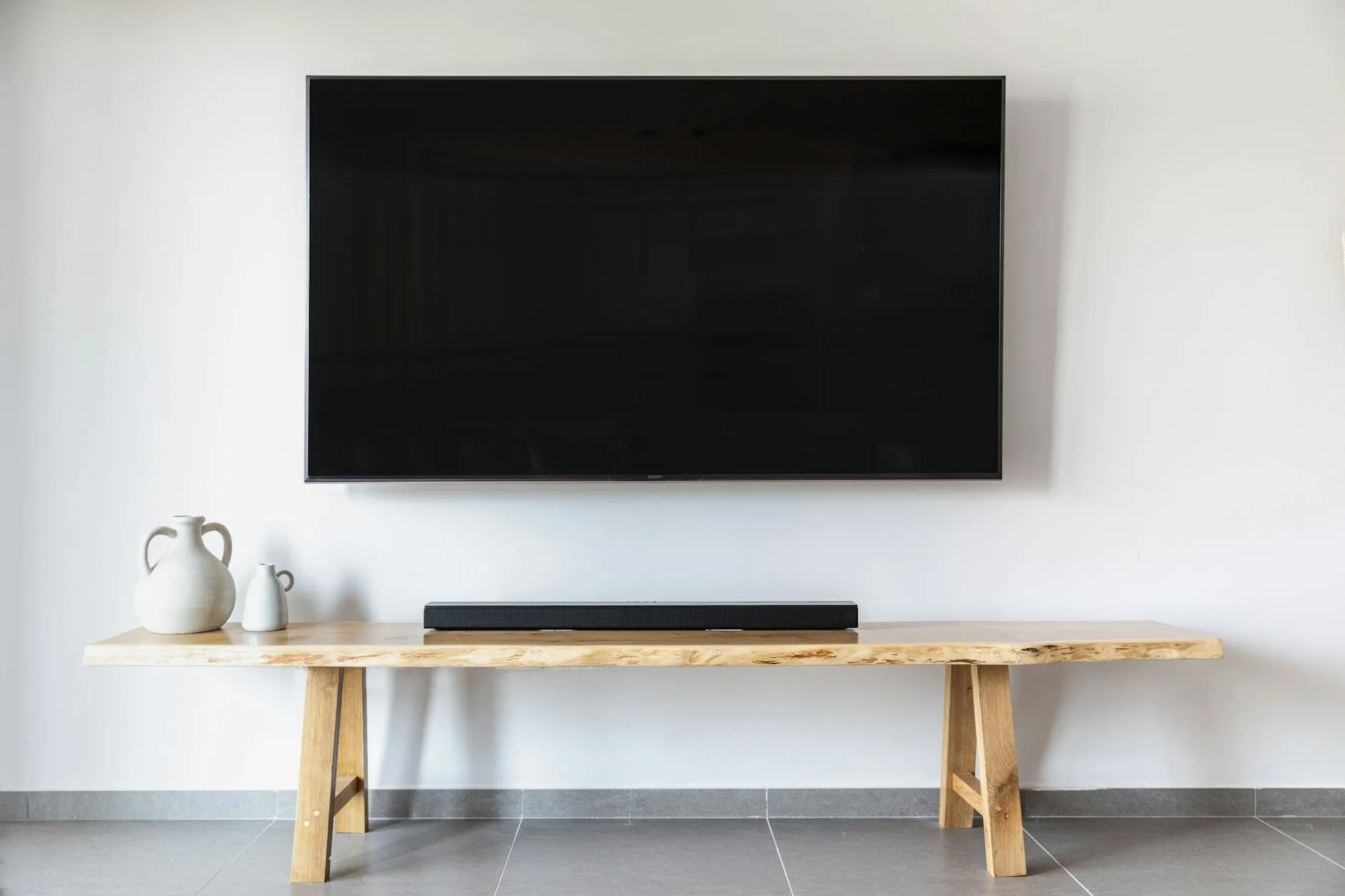
For most UK households, a soundbar is the realistic Atmos entry point.
How Soundbar Atmos Works
The soundbar contains multiple drivers — some firing forward, some firing upward. The upward-firing drivers bounce sound off the ceiling to create the height effect. Better soundbars also include side-firing drivers for width. Some systems add wireless rear speakers for a more immersive surround effect.
The Room Matters
Soundbar Atmos works best in rooms with flat, hard ceilings at standard height (2.3-2.7m). If your ceiling is textured artex, very high, sloped, or covered in soft furnishings, the reflected sound scatters and the height effect weakens or disappears entirely. In a typical UK living room with standard plaster ceiling, it works surprisingly well.
Our Soundbar Picks
- Sonos Arc (about £700-900) — the best Atmos soundbar for most people. Wide soundstage, good height effect, integrates with the Sonos ecosystem. Add two Sonos Era 100s as rears for the full effect.
- Samsung HW-Q990D (about £900-1,200) — comes with wireless subwoofer and rear speakers in the box. The most immersive soundbar Atmos experience without a discrete speaker system.
- Sony HT-A7000 (about £1,000-1,300) — excellent for music and films. The beam-forming technology creates a wide, precise soundfield.
- Budget: JBL Bar 1000 (about £500-700) — detachable rear speakers, decent height effect, and a substantial wireless subwoofer. The best Atmos experience under £700.
Atmos on Headphones
This sounds like a gimmick. It isn’t — when it works.
Apple Spatial Audio
Available on AirPods Pro and AirPods Max. Uses head-tracking so the sound stays anchored to the screen as you move your head. Watch an Atmos film on an iPad with AirPods Pro and the sound surrounds you — dialogue stays locked to the screen, ambient sounds fill the space around your head, and height effects are surprisingly convincing.
Dolby Atmos for Headphones
Available on Windows, Xbox, and some Android devices. Works with any headphones. The processing simulates speaker positions around and above you. No head-tracking (unlike Apple), so the effect is less immersive, but it’s still a clear upgrade over standard stereo for Atmos content.
The Limitation
Headphone Atmos is virtual. It’s clever DSP processing, not real speakers in real positions. It can’t match a physical speaker setup for precision or impact. But for late-night viewing when you can’t wake the house, or in a small flat where speakers aren’t practical, it’s remarkably good. Our Best Soundbars 2026 UK: Dolby Atmos, Budget & Premium guide is useful alongside this.
Content That Supports Atmos
Having Atmos hardware is pointless without Atmos content. Here’s where you’ll find it.
Streaming
- Netflix — extensive Atmos library on Premium plan (films and selected series)
- Disney+ — most Marvel and Star Wars content in Atmos
- Apple TV+ — all original content in Atmos
- Amazon Prime Video — growing Atmos library
- Tidal and Apple Music — Atmos for music (see below)
Physical Media
4K Ultra HD Blu-ray discs offer lossless Dolby Atmos (TrueHD), which is the highest-quality Atmos you can get at home — better than any streaming service. You’ll need a 4K Blu-ray player (about £150-300 from Panasonic or Sony, available at Currys or Richer Sounds).
Gaming
PS5, Xbox Series X, and PC all support Atmos in supported games. The effect in games is impressive — hearing footsteps above you in a multi-level building, rain hitting different surfaces around you. Forza Horizon, Halo Infinite, and Resident Evil Village all have excellent Atmos implementations.

Is Atmos Worth It for Music?
The honest answer: it depends on what you listen to.
When It Works
Atmos music mixes (available on Apple Music and Tidal) place instruments and vocals in 3D space. Well-mixed Atmos tracks — like Billie Eilish’s Happier Than Ever or The Beatles’ remasters — are revelatory. Vocals float in the centre while instruments surround you. It’s like stepping inside the recording studio.
When It Doesn’t
Badly mixed Atmos music — and there’s a lot of it — just sounds like stereo with added reverb. Instruments get placed in random positions for the sake of it, and the result is distracting rather than immersive. The format is still maturing, and quality varies wildly between artists and studios.
The Verdict on Music
If you already have Atmos hardware for films, enable it for music and enjoy the good mixes. Don’t buy Atmos hardware specifically for music unless you’re an audiophile who’s heard it and loved it. For most listeners, a good stereo or 2.1 system will serve music better than a mediocre Atmos setup. Our bookshelf speaker guide covers quality stereo options. We cover a similar decision in Best Bluetooth Speakers 2026: Portable & Home Tested.
What You Need to Know Before Buying
Your Room Determines Your Experience
A dedicated cinema room with controlled acoustics will get the most from Atmos. A living room with hard floors, glass doors, and furniture everywhere will compromise the effect. You don’t need a perfect room, but managing expectations matters.
Ceiling Height and Material
Upward-firing speakers and soundbar Atmos rely on ceiling reflections. UK standard ceiling height (2.4m) works well. Below 2.2m and sounds can feel compressed. Above 3m and reflections become too diffuse for a convincing height effect.
eARC Is Essential
If you’re using a soundbar or AV receiver, make sure your TV has an eARC HDMI port. Without it, Atmos from streaming apps is limited to lossy Dolby Digital Plus. With eARC, you get the full Atmos signal.
The Diminishing Returns Curve
Going from stereo TV speakers to a basic Atmos soundbar is a massive upgrade. Going from a soundbar to a 5.1.2 discrete system is a noticeable upgrade. Going from 5.1.2 to 7.1.4 is a subtle upgrade that most people won’t notice outside of reference-quality content. Spend your money where the biggest jumps happen.
Our Recommendations
Best Entry Point: Sonos Arc (about £700-900)
The Sonos Arc is the recommendation for most UK households. It delivers convincing Atmos height effects in standard rooms, sounds excellent with music and TV, and doesn’t require any cable management beyond a single HDMI and power lead.
Best Full System: Denon AVR-X2800H + Q Acoustics 3010i 5.1 + Q Acoustics 3000i height (about £1,800-2,200 total)
For a dedicated room. The Denon receiver handles 7 channels natively, and Q Acoustics make the best budget speakers in the UK. This combination delivers reference-quality Atmos at a price point that doesn’t require selling a kidney.
Best Budget: JBL Bar 1000 (about £500-700)
The cheapest way to get a proper Atmos experience with rear speakers included. It won’t match the Sonos Arc for pure sound quality, but the surround effect is more immersive thanks to the physical rear speakers.
Frequently Asked Questions
Is Dolby Atmos worth it at home? Yes, if you watch films regularly and care about audio immersion. The jump from stereo TV speakers to an Atmos soundbar is dramatic. The jump from a good 5.1 system to Atmos is more subtle. Start with a soundbar and upgrade later if you want more.
Do I need special speakers for Dolby Atmos? You need an Atmos-capable device — either a soundbar with upward-firing drivers, an AV receiver that decodes Atmos with height speakers, or compatible headphones. Standard 5.1 speakers work for the ear-level channels but you need additional height speakers for the overhead effect.
Does Netflix support Dolby Atmos? Yes, on the Premium plan. Most major films and selected series are available in Atmos. You also need a compatible device (smart TV, streaming stick, or game console) and either an Atmos soundbar, AV receiver, or Atmos-enabled headphones.
Can a soundbar do real Dolby Atmos? Soundbars create Atmos height effects by bouncing sound off the ceiling using upward-firing drivers. It works well in rooms with flat ceilings at standard height but doesn’t match ceiling-mounted speakers for precision. For most living rooms, the result is convincing and practical.
Is Dolby Atmos better than 5.1 surround sound? Atmos adds height information that 5.1 lacks, making the sound more three-dimensional. Whether that matters depends on your content — action films and games benefit most. For music and dialogue-heavy TV, the difference over a good 5.1 system is minimal.