Creating a true home cinema experience is about more than just buying quality equipment—it’s about how you position surround sound speakers in your room. Correct placement transforms films, TV, and games, letting you hear every detail as intended. In this complete guide, you’ll discover what actually matters for UK homes, from sofa placement to handling tricky room shapes, so you can enjoy surround sound at its best.
In This Article.
- Start With the Sofa, Not the Speakers
- Position Surround Sound Speakers: The Core Layout
- Front Left, Centre and Right Speakers
- Side and Rear Surround Placement
- Subwoofer Positioning Without Boomy Bass
- Atmos and Height Speaker Choices
- Awkward UK Living Room Layouts
- Testing and Fine-Tuning the System
- Frequently Asked Questions
Start With the Sofa, Not the Speakers
Before you even unpack your boxes, your first step is to decide where you’ll actually sit. Many setups fail because the sofa is awkwardly off-centre or too close to the back wall. Your listening position should shape the whole layout.
Why the sofa matters:
- It’s your main listening spot, so all speaker distances and angles should relate to it.
- Being too close to a wall (especially the back wall) can ruin surround effects and muddy the bass.
- In UK living rooms, space is often tight—so measure first, and don’t be afraid to shift furniture.
Measuring Your Room
Grab a tape measure and note:
- Distance from the back wall to the TV wall
- Room width
- Obstructions (doors, radiators, fireplaces)
If your sofa is against the back wall, try to pull it forward by at least 30–40cm. Even a small gap helps with rear speaker placement and bass clarity.
Planning for Multiple Listening Positions
If you have a family or often entertain, consider how multiple seats will affect your surround sound. The ideal is to have the main seat (the “sweet spot”) in the centre, but you can optimise for a wider area by slightly adjusting speaker angles and levels. For more on this, see our How to Position Speakers for the Best Sound guide.
Position Surround Sound Speakers: The Core Layout
The classic surround sound setup is a 5.1 system: left, centre, right, two surrounds, and a subwoofer. More advanced layouts (like Dolby Atmos) add height speakers, but the basics always start here.
Standard Configurations
- 5.1: Five speakers and one subwoofer—ideal for most UK living rooms.
- 7.1: Adds two rear surrounds for bigger rooms.
- Atmos (5.1.2, 7.1.4, etc.): Adds ceiling or height speakers.
For diagrams and detailed layouts, Dolby speaker setup guides is a reliable starting point.
Speaker Angles and Distances
Here’s a quick numbered list for the basic 5.1 layout:
- Place your centre speaker directly in front, just under or above your TV.
- Put left and right speakers at ear height, forming a 22–30° angle from your seat.
- Position surround speakers to the sides, slightly behind your ears at 90–110°.
- Subwoofer can go near the front, but experiment for best bass.
If you’re planning a full home cinema, check out our How to Set Up a Home Cinema on a Budget guide for tips on balancing layout and cost.
Why Angles Matter
Speaker angles are crucial for creating a seamless soundstage. Too wide, and you’ll get a gap in the middle; too narrow, and the sound will feel cramped. Use a protractor app or printable angle guide to get it right.
Room Size and Speaker Choice
Larger rooms may benefit from floor-standing speakers, while smaller UK living rooms often work best with compact bookshelf or satellite speakers. For more on choosing speakers, see our Soundbar vs AV Receiver: Which Is Right for Your Room?.
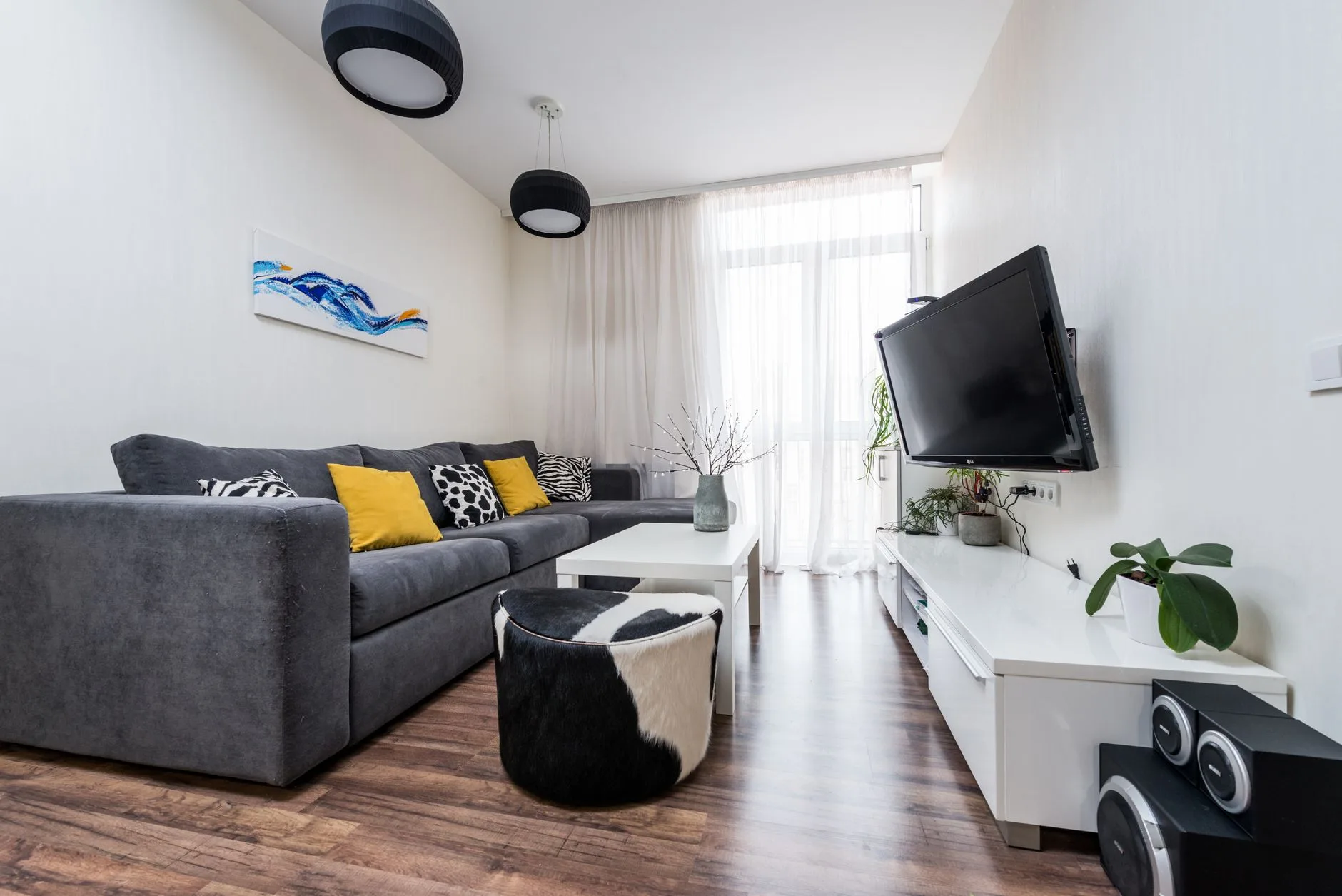
Front Left, Centre and Right Speakers
Your front three speakers anchor the entire soundstage. Get these wrong, and dialogue, music and effects will never sound quite right.
Centre Speaker Placement
- Place as close to ear height as possible—just below or above the TV.
- Angle (“toe-in”) the speaker slightly towards your main seat.
- Avoid putting it inside a closed cabinet; open shelves or stands are best.
Left and Right Speaker Setup
- Position at least 1.5–2 metres apart, equidistant from your listening position.
- The tweeters (the small dome at the top) should be at ear level when seated.
- Angle the speakers very slightly inwards, so their sound crosses just behind your head.
I usually recommend experimenting with speaker toe-in. Too much can make the sound narrow; too little and you lose focus. Trust your ears—move them in small increments.
TV and Projector Considerations
If you’re using a projector, make sure the centre speaker isn’t blocked by the screen or furniture. For more on projector setup, see Best Projectors for Home Cinema 2026.
Acoustic Treatments for the Front Wall
Adding acoustic panels or thick curtains behind your front speakers can help reduce reflections and improve clarity, especially in rooms with lots of hard surfaces. Even a simple rug or wall hanging can make a difference.
Side and Rear Surround Placement
Surround speakers are what give you that immersive, “in the action” feeling. But the mistake I see is people putting them too far back or too high.
Side Surrounds
- Place to the left and right of your sofa, just behind your ears.
- Height should be 10–30cm above seated ear level.
- Angle them inwards very slightly.
Rear Surrounds (7.1 Systems)
- Only use if you have space behind your sofa (at least 1 metre).
- Place directly behind, spaced about the same width as your sofa.
- Mount at ear height if possible, or just above.
What if your sofa is against the back wall?
- Mount side surrounds a bit higher (up to 60cm above ear level).
- Angle them downwards towards your seat.
- Use wall brackets or slim speakers to save space.
For more practical tips, see our dedicated guide: How to Position Speakers for the Best Sound.
Common Mistakes to Avoid
- Placing surrounds too far forward—keep them to the sides or slightly behind.
- Pointing them directly at your ears—diffuse sound is better for surround effects.
- Mounting too high—above 60cm over ear level loses impact.
Bipole and Dipole Surrounds
Some speakers are designed to spread sound more widely. Bipole and dipole surrounds can be ideal for rooms where direct placement is difficult, such as with open-plan layouts or when the sofa is against a wall.
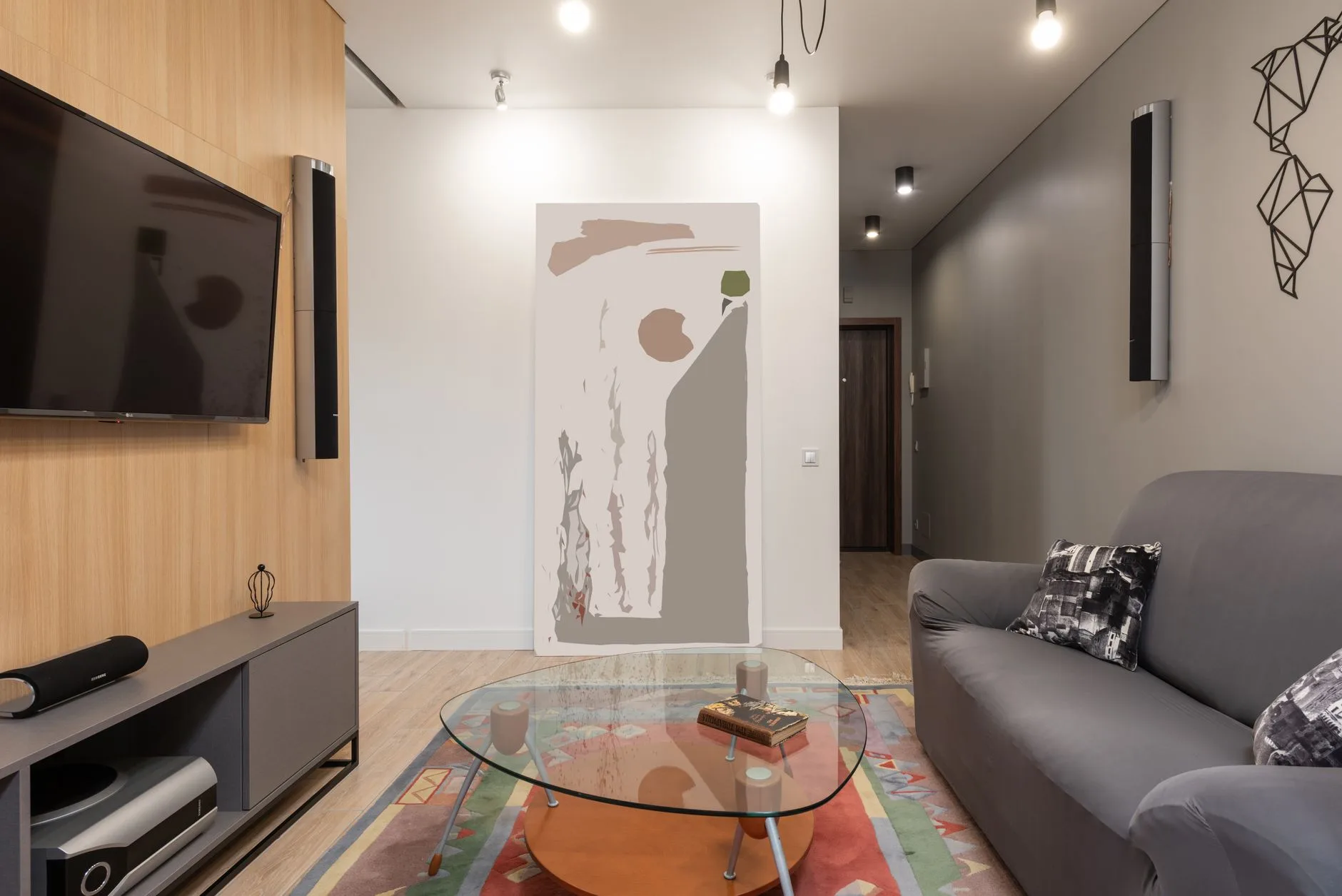
Subwoofer Positioning Without Boomy Bass
Subwoofers can be tricky—what works in one room might sound awful in another. The goal is tight, even bass, not boomy or “one-note” rumble.
Best Subwoofer Locations
- Start near the front wall, away from corners if possible.
- Avoid placing the sub directly against a wall or in a tight alcove.
- Corners boost bass but can make it uneven.
The “Subwoofer Crawl” Method This is the approach I would use in a new room:
- Place the subwoofer in your main listening position (yes, right on the sofa!).
- Play a bass-heavy track or test tone.
- Crawl around the perimeter of the room, listening for even, deep bass.
- Mark the spot where bass sounds tightest—this is where you should place the sub.
Multiple Subwoofers
If you struggle with “dead spots” or uneven bass, adding a second sub can help. This isn’t just for huge home cinemas—many UK rooms benefit from two smaller subs, placed on opposite walls.
For more on matching your amp to your speakers, see Soundbar vs AV Receiver: Which Is Right for Your Room?.
Room Treatments for Bass
Bass traps in the corners of your room can help absorb excess low frequencies, creating a more balanced sound. Even thick curtains or bookshelves can help break up standing waves.
Wireless Subwoofers
If running cables is difficult, consider a wireless subwoofer kit. These can be a good solution in UK homes where routing wires is tricky due to solid walls or awkward layouts.
Atmos and Height Speaker Choices
Height speakers take surround sound to another level—literally. If you’re considering Dolby Atmos or DTS:X, speaker placement becomes even more important.
Types of Height Speakers
- In-ceiling speakers: Best for dedicated rooms or new builds.
- Upfiring modules: Sit on top of your front/rear speakers and bounce sound off the ceiling.
- On-wall height speakers: Mounted high on the front or side walls.
Placement Guidelines
- Place height speakers directly above the front left/right, or above your seating position.
- Aim for a symmetrical layout—uneven placement ruins the overhead effect.
- If using upfiring modules, ensure your ceiling is flat and not too high (ideally under 2.7m).
For a detailed comparison of Atmos and DTS:X, see Dolby Atmos vs DTS:X: Home Cinema Audio Formats Explained.
Common Issues in UK Homes
- Low ceilings: Upfiring modules work better here than in-ceiling speakers.
- Uneven ceiling shapes: Try on-wall height speakers angled towards the listening area.
For official diagrams, check the Dolby speaker setup guides.
Upgrading to Atmos
If you’re upgrading from a 5.1 or 7.1 system, you may be able to add height speakers without replacing your entire setup. Many AV receivers support adding extra channels for Atmos. Check your model’s specifications and plan the upgrade around the channels your receiver can actually power.
Awkward UK Living Room Layouts
Not every UK living room is a perfect rectangle—far from it. Alcoves, bay windows, fireplaces and radiators all add challenges. Here’s how to adapt:
Common Problems
- Fireplaces: Mount speakers above or to the side, using wall brackets.
- Radiators: Avoid placing speakers directly above heat sources.
- Alcoves: Use them for side surrounds, or place bookshelf speakers inside.
- Bay windows: Angle speakers towards the centre of the room.
Tips for Small Rooms
- Use compact or wall-mounted speakers to save space.
- Pull the sofa forward if possible, even by 30cm.
- Don’t be afraid to have front speakers close to the TV—just keep them at ear level.
Open Plan Spaces
- Define your cinema zone with a rug or low shelving.
- Use floor stands for flexibility; you can move speakers as needed.
- Be aware of echo—soft furnishings help.
If you’re building a system on a tight budget, prioritise compact speakers, safe cable runs and a layout that still works for everyday TV.
Dealing with Obstacles
If you have doors, windows, or built-in furniture in the way, consider using wireless or compact speakers. Wall-mounting can also help you get the right angles even in awkward spaces.
Acoustic Challenges
UK homes often have solid walls and hard floors, which can create harsh reflections. Add rugs, curtains, and cushions to soften the sound. For more on this, see How to Position Speakers for the Best Sound.
Testing and Fine-Tuning the System
Once everything’s in place, it’s time to test and tweak. Don’t skip this step—small adjustments can make a huge difference.
Using Your AV Receiver’s Calibration
Most modern receivers have built-in calibration (like Audyssey, YPAO, or Dirac). Run the auto-setup first, then make manual tweaks.
- Place the supplied microphone at your main seat, at ear height.
- Run the calibration process, following on-screen prompts.
- Check the results—sometimes the system sets speakers to “large” or “small” incorrectly. Adjust if needed.
Manual Tweaks
- Adjust speaker levels so that all channels sound equally loud.
- Use a sound meter app to check balance if you’re unsure.
- Fine-tune speaker distances in the receiver’s settings for tighter imaging.
What to Listen For
- Dialogue should sound like it’s coming from the TV, not above or below.
- Panning effects (like cars passing) should move smoothly from left to right.
- Surround effects should feel enveloping, not distracting.
- Bass should be deep but not overpowering.
Troubleshooting Common Problems
- Muffled dialogue: Raise the centre speaker or angle it up.
- Weak surround effects: Check surround speaker angles and heights.
- Boomy bass: Move the subwoofer away from corners or try the crawl method again.
For even more fine-tuning tips, check How to Position Speakers for the Best Sound.
Ongoing Maintenance
Revisit your setup every few months, especially if you move furniture or add new equipment. Even small changes in room layout can affect your sound.
Frequently Asked Questions
How far apart should my front left and right speakers be?
Aim for 1.5–2 metres apart, angled so they form a 22–30° arc from your listening position. Too wide and you’ll get a “hole” in the middle; too close and the sound will feel cramped.
Can I put my sofa against the back wall?
It’s not ideal, as it makes rear speaker placement difficult and can muddy the bass. If you have no choice, mount surround speakers higher and angle them down towards the seating area.
Do I need special speakers for Dolby Atmos?
Not always—you can use upfiring modules on top of your existing speakers, or add in-ceiling or on-wall height speakers. The key is correct placement for your ceiling height and room shape.
Where should I place my subwoofer for the best bass?
Start near the front wall but experiment using the “subwoofer crawl” method. Avoid corners if the bass sounds boomy or uneven. Two subs can help in tricky rooms.
How do I get good sound in a small or awkward UK living room?
Use compact speakers, wall mounts, and pull the sofa forward if possible. Adapt the layout to your room’s quirks—don’t force a “perfect” diagram if the space won’t allow it.
Should I use my AV receiver’s auto calibration?
Yes, it’s a good starting point. But trust your ears and make manual tweaks for the best results. Sometimes the auto settings aren’t perfect for UK rooms with odd shapes or furnishings.